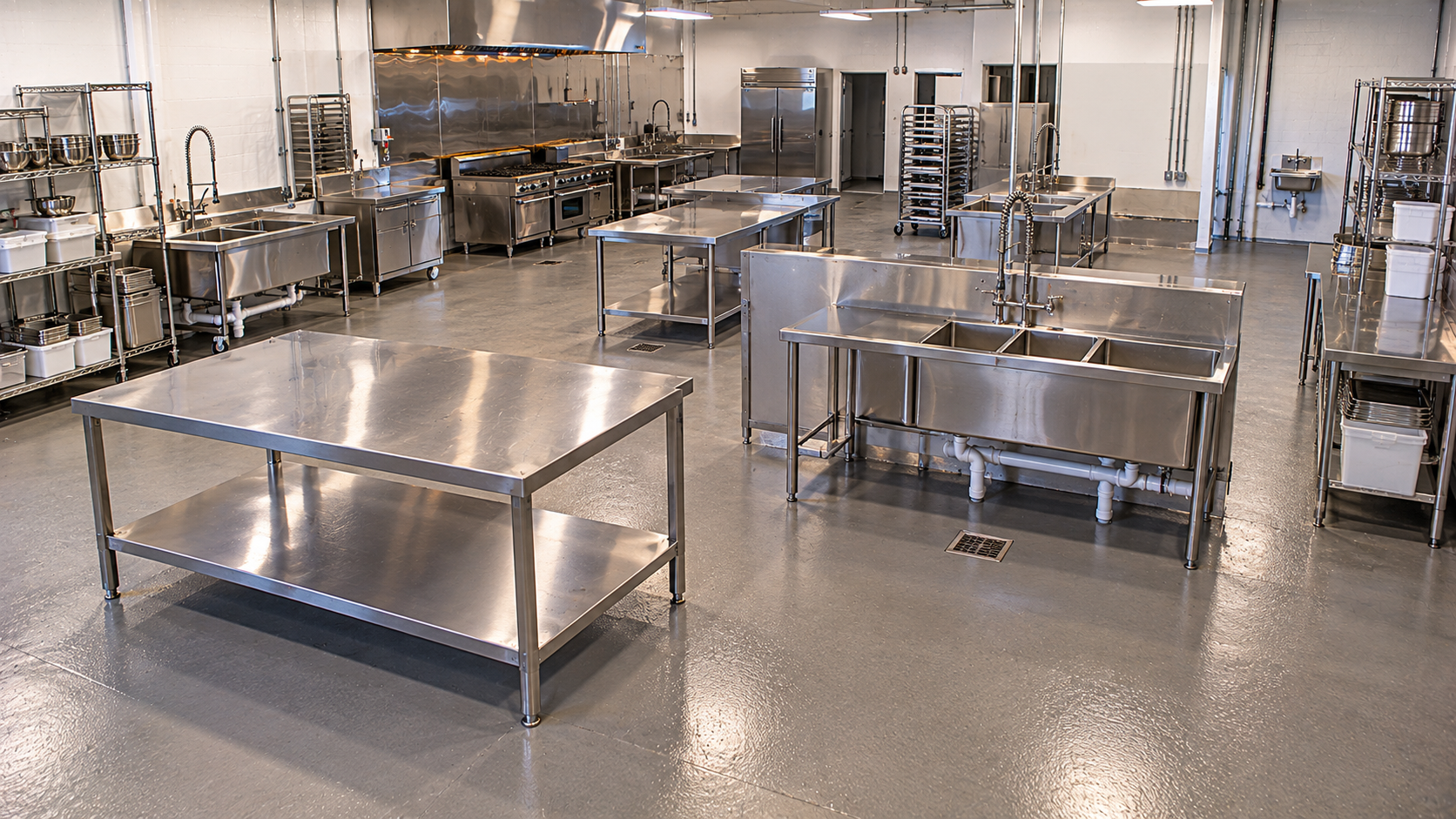
Las Sendas restaurant plumbing depends on getting the sinks and floor drains right. Las Sendas, the hillside community in northeast Mesa near Red Mountain and the Usery foothills, has neighborhood centers that host family restaurants, coffee shops, taco spots, and bakeries. Every one of these kitchens must meet strict health rules for sinks and drainage. When the layout is planned well, inspections go smoothly and the kitchen runs cleanly. This guide explains how to plan sinks and floor drains for a restaurant tenant improvement in Las Sendas.
Restaurant owners, kitchen designers, and general contractors will find the key steps here.
Why Sinks and Drains Matter So Much
Health inspectors focus closely on sinks and drains because they protect food safety. In fact, a missing hand sink or a poorly placed floor drain can delay an opening. In addition, drains that clog or back up can shut a kitchen down during service. So these details deserve as much attention as the cooking line or the dining room design.
Las Sendas Restaurant Plumbing: The Sink Lineup
Most restaurant kitchens need several kinds of sinks. Each has its own job:
- Hand sinks for staff to wash hands near prep and cooking areas
- Prep sinks for rinsing produce and thawing food
- Three-bay dish sinks where staff scrub, rinse, and sanitize pots and plates
- Mop or service sinks for cleaning floors and dumping mop water
- Bar sinks for drink service, if the restaurant has a bar
Your kitchen designer will place each sink based on workflow and health rules.
Hand Sink Placement
Hand sinks must be easy to reach from every work area. Typically, health codes limit how far staff can walk to wash their hands. They also require hot and cold water, soap, paper towels, and a trash can at each sink. In addition, hand sinks cannot be used for food or dishes. So plan enough of them, especially in large kitchens with several stations.
Las Sendas Restaurant Plumbing for Three-Compartment Sinks
The three-compartment sink is the heart of manual dishwashing. Each compartment must be large enough for the biggest pots and pans. Drainboards on both sides give room for dirty and clean items. In addition, the sink usually drains through a grease interceptor. Placing it near the dish area and the grease line keeps drain runs short and simple.
Floor Drains Versus Floor Sinks
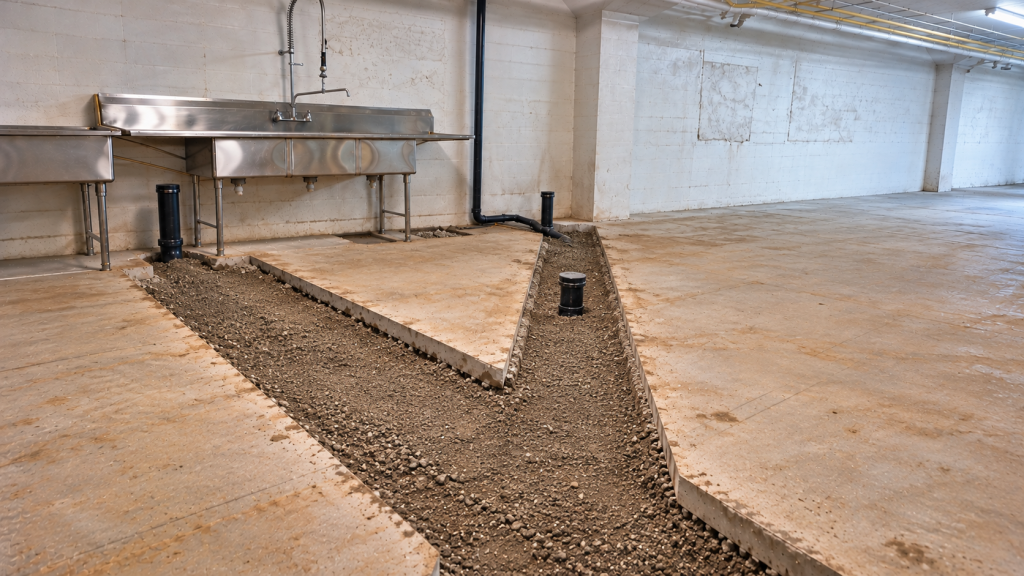
Kitchens use two kinds of floor openings. Floor drains sit flush with the floor and catch water from mopping and spills. Floor sinks are recessed basins that receive water from equipment through an air gap. For example, ice machines, steam tables, and some dishwashers drain into floor sinks. The air gap keeps dirty water from backing into equipment. So each piece of equipment needs a planned drain path.
Las Sendas Restaurant Plumbing and Floor Slope
Floor drains work only if water flows to them. Therefore, the floor around each drain must slope gently toward it. In an existing slab, crews may need to grind or add topping to create that slope. In addition, drains should sit where water naturally collects, such as near the dish area, walk-in coolers, and cooking lines. Good slope makes nightly cleanup faster and safer.
Las Sendas Restaurant Plumbing and Grease Interceptors
Grease from cooking and dishwashing can clog drains and city sewers. So most restaurants need a grease interceptor. Larger kitchens often use an outdoor in-ground unit, while smaller ones may use an indoor unit under a sink. The size depends on the fixtures that drain into it. Our article on grease interceptor sizing and permits explains this step in detail.
Hot Water in Las Sendas Restaurant Plumbing
Restaurants use a lot of hot water. Hand sinks need it all day, and dishwashing needs it in large amounts. Certain dish machines rely on a booster unit to get hot enough to sanitize. For that reason, size the main heater for your busiest service, not a slow Tuesday. Running out of hot water during a rush is both a safety and a service problem.
Las Sendas Restaurant Plumbing in Second-Generation Spaces
Moving into an old restaurant suite can cut costs, because some sinks, drains, and grease equipment may still be in place. However, the old layout rarely matches the new menu. In addition, old drains may be full of grease or damaged. So run a camera through the drain lines and have the interceptor pumped and inspected. Then decide what to keep and what to change.
Backflow Protection
Kitchens connect many devices to the water supply, such as ice machines, coffee makers, and soda systems. Backflow devices keep used water from reversing into the clean supply. Many of these devices need yearly testing. So include them in the design and keep test records on site.
Health Review and Inspections
Restaurants in Mesa go through both city building inspections and Maricopa County health review. The county reviews kitchen plans, including sinks, drains, and finishes, before opening. For the county’s plan review steps, see its food safety pages. Meanwhile, the City of Mesa handles plumbing permits and inspections.
Scheduling Las Sendas Restaurant Plumbing
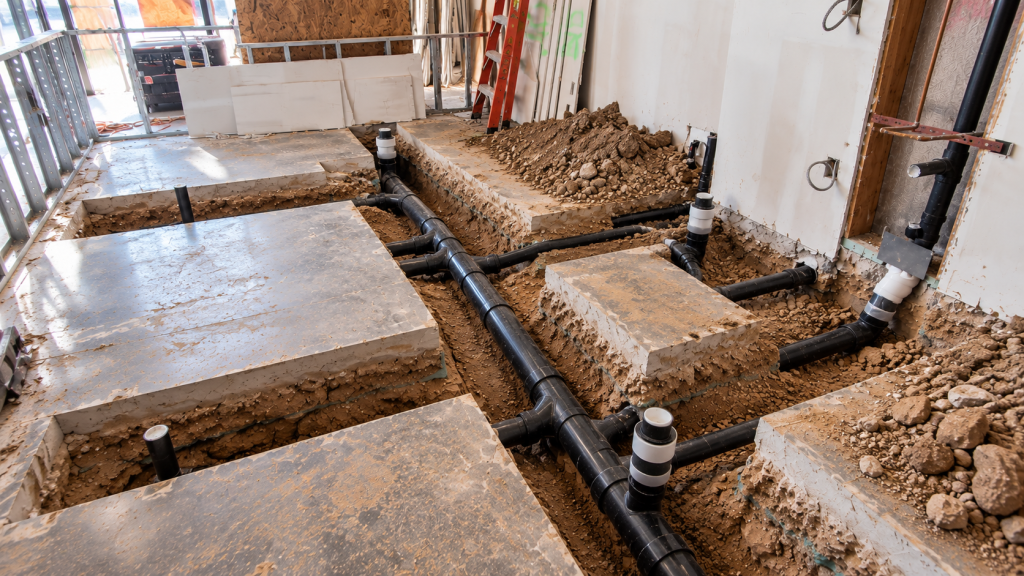
Restaurant plumbing usually starts with underground drains and the grease interceptor. Next, crews rough in water, gas, and vents inside walls. After inspections, walls and floors are finished. Finally, equipment arrives and the plumber makes final connections. Good coordination with the kitchen equipment supplier keeps this process on time.
Walk-In Coolers and Ice Machines
Walk-in coolers and ice machines both create water that must drain away. Cooler condensate lines and ice machine drains usually run to a floor sink through an air gap. So plan where each unit sits and how its drain reaches the floor sink. In addition, ice machines need a filtered water line. Mesa water is hard, so a good filter protects the machine and keeps ice clear.
Bars and Beverage Stations
Many Las Sendas restaurants serve drinks. Bars need sinks, ice bins with drains, glass washers, and beverage lines. Each item needs a drain and often a water line. Because bars sit in the dining room, the drains may run under the floor a long way to reach the main line. So plan the bar early with the rest of the kitchen plumbing.
Budgeting for Sinks and Drains
Floor sinks, grease interceptors, and long drain runs can add up quickly. Placing sinks and drains close together and near the main line saves money. Reusing existing infrastructure where it fits also helps. For more on pricing, see our restaurant plumbing page.
Common Mistakes in Kitchen Plumbing
- Too few hand sinks for the size of the kitchen
- Equipment drains without proper air gaps
- Floor drains placed where water does not flow
- Undersized grease interceptors
- Skipping a camera inspection in a reused space
Sink and Drain Checklist
- Map every sink by type and location
- Plan hand sinks within easy reach of each station
- Assign a drain path for every piece of equipment
- Slope floors toward drains
- Size grease control and hot water for peak service
- Add backflow protection where required
- Schedule health and building reviews early
Open a Kitchen That Passes Inspection
Careful Las Sendas restaurant plumbing helps your kitchen pass inspection and run smoothly from the first service. To plan your build-out, explore our East Valley restaurant plumbing services or send us your kitchen plan.