
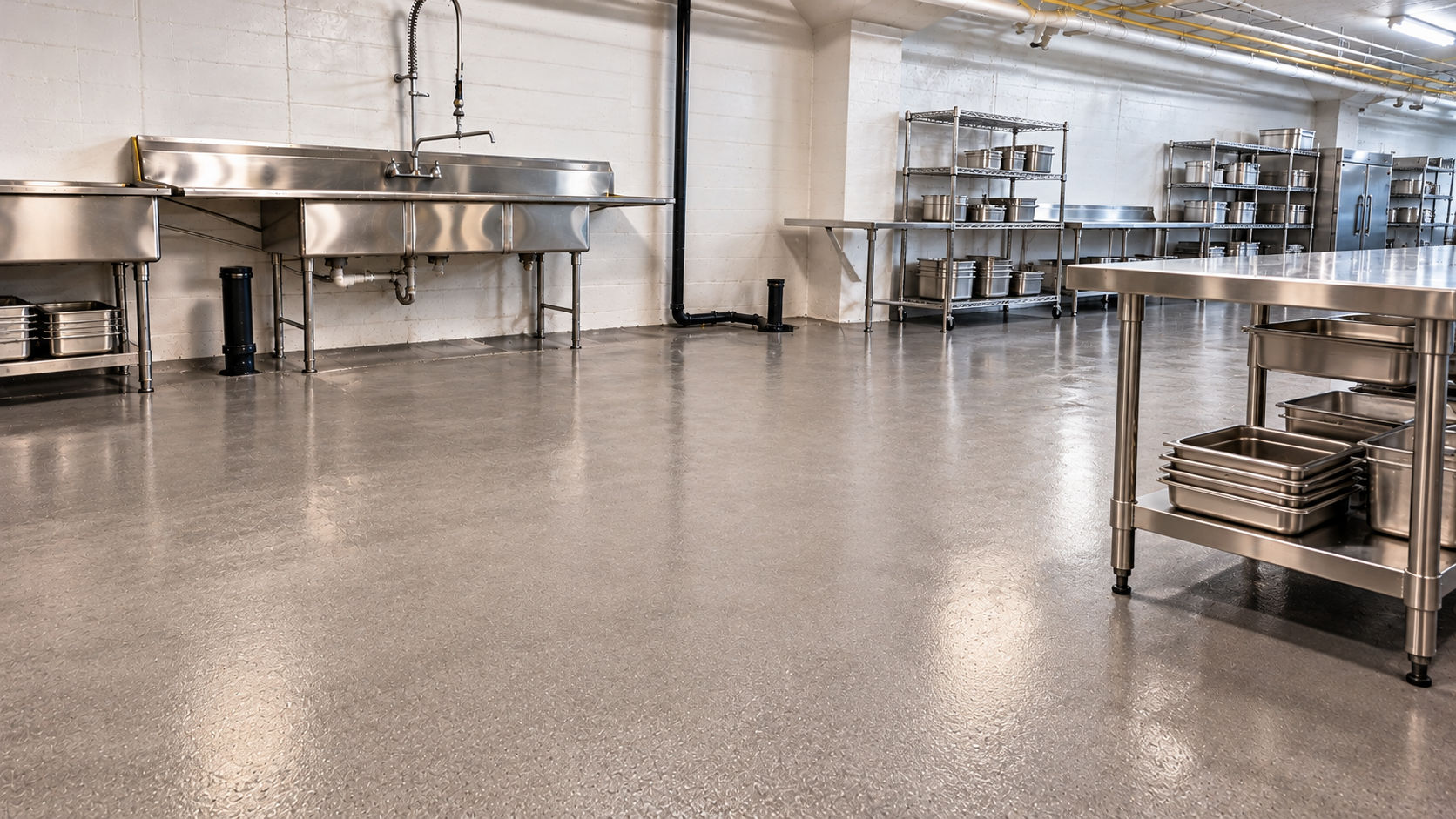
Summerlin West grease interceptors and floor sinks are two of the most important parts of any restaurant build-out on the western edge of Las Vegas. Summerlin West, near Downtown Summerlin and the newer villages along the 215 Beltway, has a growing mix of restaurants, cafés, and food halls. Each new kitchen produces grease and wastewater that the plumbing must handle safely. If interceptors are too small or floor sinks sit in the wrong spot, the kitchen can back up, fail inspection, or face fines. This post explains how to plan grease interceptors and floor sinks during a restaurant tenant improvement.
Use it to plan this critical work early with your designer and builder.
How Summerlin West Grease Interceptors Work
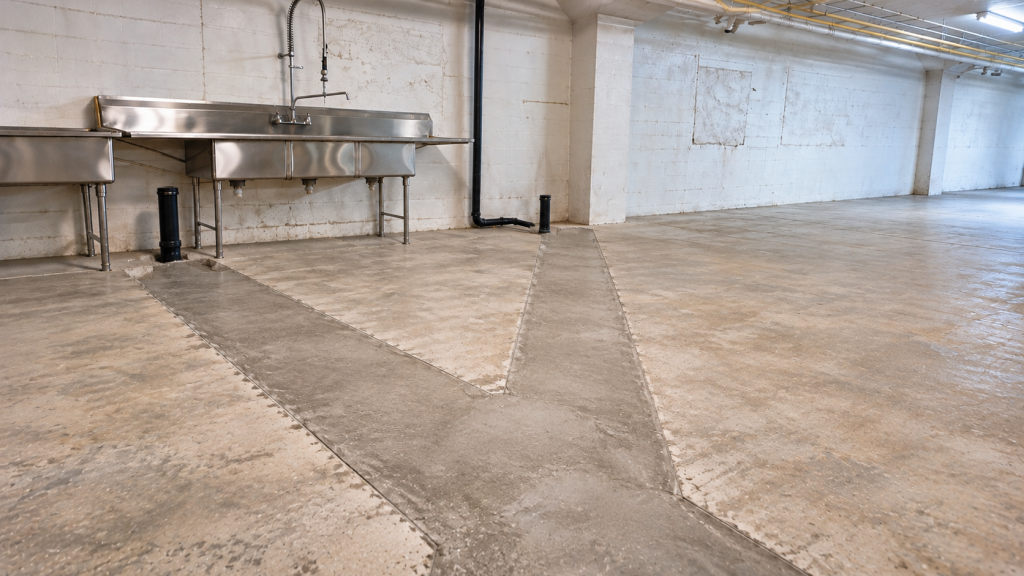
A grease interceptor is a tank that catches fats, oils, and grease before they reach the sewer. As wastewater flows in, grease floats to the top and solids sink. Cleaner water flows out the other side. Without an interceptor, grease cools and hardens in sewer lines, causing clogs and overflows. That is why the city requires Summerlin West grease interceptors at most food businesses.
Summerlin West Grease Interceptors and Local Rules
Local wastewater rules decide when a kitchen needs an interceptor and how big it must be. In the City of Las Vegas, the sewer program reviews grease control for food establishments. The Southern Nevada Health District also reviews kitchen plans. So check both sets of requirements early. Your plumber and kitchen designer can help confirm what applies.
Sizing Summerlin West Grease Interceptors
Interceptor size depends on how much grease-laden water the kitchen produces. Some methods count fixtures and their flow rates. Others use the number of meals or seats. A busy full-service restaurant needs a much larger unit than a small café. An undersized interceptor fills too fast and lets grease pass through. So size Summerlin West grease interceptors for peak volume, not average days.
Indoor vs. Outdoor Interceptors
Small grease traps can sit under sinks or in the floor. Larger interceptors usually go outside in the ground near the back of the building. Outdoor units hold more and are easier to pump. However, they need space, access for pumping trucks, and coordination with the parking lot. In shopping centers, the landlord may provide a shared interceptor. Ask about it before you design your own.
Summerlin West Grease Interceptors and Kitchen Layout
The kitchen layout decides which fixtures connect to the interceptor. Grease shows up in pot sinks, prep sinks, mop sinks, and most floor drains. Restroom fixtures and hand sinks usually do not. So the plumber runs separate grease and sanitary lines. In addition, the grease line should take the shortest practical path to the interceptor to limit cooling and buildup.
What Floor Sinks Do
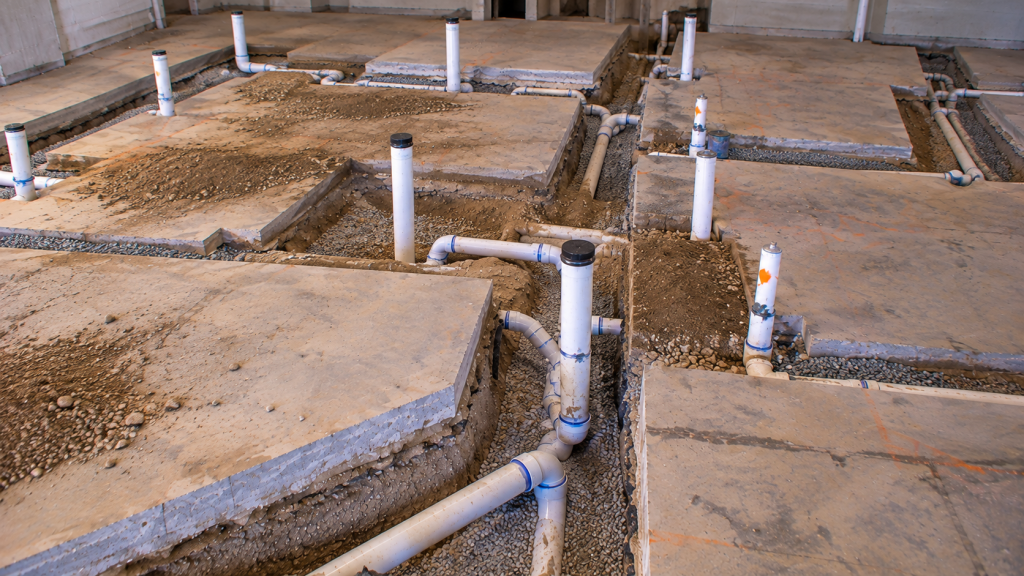
Floor sinks are square drains set flush with the floor. They collect drain water from gear such as ice makers, steam tables, dipper wells, and drink stations. An air gap between the equipment drain and the floor sink stops dirty water from backing up into food equipment. So floor sinks protect both the kitchen and public health.
Placing Floor Sinks
Keep each floor sink within a short reach of its equipment. Long indirect drain lines can clog and create mess. However, avoid putting floor sinks in main walkways, where grates can be trip hazards. In addition, plan grates and baskets that are easy to clean. The kitchen designer and plumber should agree on every location before slab work starts.
Below-Slab Work
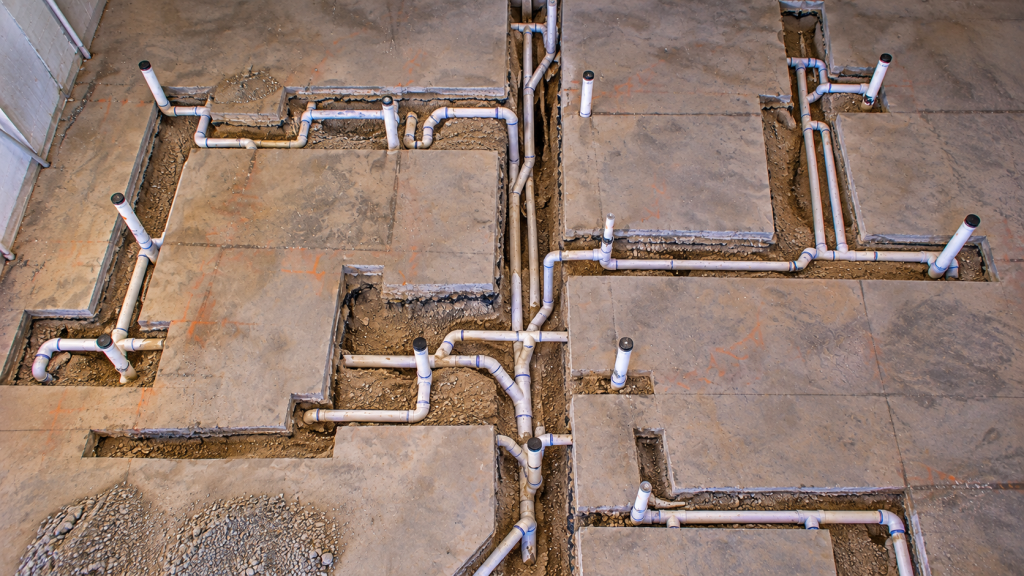
Most interceptor and floor sink lines run under the slab. In a shell space, the plumber saw-cuts the floor, digs trenches, and lays pipe at the correct slope. Inspectors check the pipe before crews close the trench. Changes after the concrete pour cost a lot. So lock in the layout first. Our rough-in plumbing page has more detail.
Summerlin West Grease Interceptors Maintenance
Interceptors need regular pumping. How often depends on size and kitchen volume, but many restaurants pump every one to three months. In addition, staff should scrape plates before washing and never pour grease down drains. Keep pumping records on hand, since inspectors may ask for them. Good habits keep Summerlin West grease interceptors working and avoid fines.
Odor Control and Venting
Grease interceptors need proper venting so gases can escape and water flows smoothly. Poor venting can cause slow drains and bad smells in the kitchen. In addition, tight-fitting lids keep odors outside. Ask your plumber to plan vent routes along with the grease lines.
Sample Ports and Access
Many interceptors need a sample port so inspectors can test the water leaving the tank. In addition, every interceptor needs clear access for pumping and inspection. Lids in a driveway need a traffic rating. Plan the location so trucks can reach it without blocking customers.
Permits and Inspections
Summerlin West restaurants usually need permits from the City of Las Vegas. Plans must show the interceptor size, location, and the fixtures connected to it. In addition, the health district reviews the kitchen layout. Inspections happen at the trench, at rough-in, and at final. Submitting complete plans helps reviews go faster.
Coordinating With Other Trades
The plumber works with the concrete crew, electricians, and kitchen equipment installers. For example, the concrete crew needs to know when trenches are ready to close. The equipment installer needs to know where floor sinks sit. Bring all trades together once before the saw cuts begin. Our restaurant plumbing team handles that coordination.
Budgeting for Grease Control
Costs depend on interceptor size, location, excavation, and the number of floor sinks. Outdoor interceptors cost more to install but less to maintain. In addition, a long run from the kitchen to the interceptor adds trenching. So plan the kitchen with the interceptor location in mind. Broader price ranges appear in our cost per square foot guide.
Hydromechanical vs. Gravity Units
Grease control comes in two broad styles. Hydromechanical units are compact and often sit indoors under or near sinks. Gravity interceptors are large concrete or plastic tanks buried outside. Small cafés may get by with a hydromechanical unit, while busy full kitchens usually need a gravity tank. Your plumber can compare both for your menu and space.
Taking Over an Existing Restaurant
If you move into a former restaurant, the interceptor may already exist. Have it pumped and inspected. Check its size against your menu and volume. In addition, camera-inspect the grease lines. Reusing a good interceptor can save a lot of money, but an undersized one will cause problems later.
Practical Tips for Owners
- Size the interceptor for your busiest day
- Keep grease and sanitary lines separate
- Place floor sinks near equipment, not walkways
- Plan truck access for pumping
- Train staff to keep grease out of drains
Summerlin West Grease Interceptors Checklist
- Confirm city and health district rules
- Size the interceptor for peak volume
- Choose indoor or outdoor placement
- Route grease lines from the right fixtures
- Place floor sinks near indirect drains
- Pass underground inspection before pouring
- Set a regular pumping schedule
Keep Your Kitchen Flowing
Well-planned grease interceptors and floor sinks keep a restaurant clean, compliant, and running smoothly. With the right size, location, and maintenance plan, your Summerlin West kitchen will serve guests without plumbing trouble. Explore our Las Vegas plumbing services, or request pricing for your kitchen.