
Tenant improvement plumbing costs can swing widely from one build-out to the next. Two suites of the same size can have very different plumbing budgets. The difference usually comes down to restrooms, drainage, water supply, and the conditions hidden below the floor. This guide explains what drives these costs, where budgets go wrong, and how to plan a realistic number for your commercial space.
Whether you are a tenant, landlord, broker, or contractor, these insights will help you set expectations early and avoid surprises.
Why Tenant Improvement Plumbing Costs Vary So Much
Plumbing is one of the most site-specific trades. A suite with a sewer stub right where the restrooms will go costs far less than one where drains must run across the whole floor. Likewise, a simple office needs far fewer fixtures than a restaurant.
Other big factors include building age, slab type, local labor rates, and the use of the space. Because of this, price per square foot is only a rough guide. The real number comes from the actual layout and site conditions.
Commercial Bathrooms: The Biggest Line Item
Restrooms often make up the largest share of tenant improvement plumbing costs. Each restroom includes toilets, urinals, lavatories, drains, vents, water lines, and often a floor drain. Then add accessibility features, carriers for wall-hung fixtures, and quality trim.
Several choices affect restroom cost:
- Number of fixtures: Set by occupancy and code tables.
- Single-user vs. multi-user rooms: Single-user rooms need more walls and doors but can reduce fixture counts.
- Wall-hung vs. floor-mounted fixtures: Wall-hung fixtures look clean but need carriers.
- Sensor vs. manual faucets and valves: Sensors add cost and wiring.
- Location: Restrooms far from the sewer need longer drains.
Using existing core restrooms in the building, when available, can save a large amount.
Drainage and Tenant Improvement Plumbing Costs
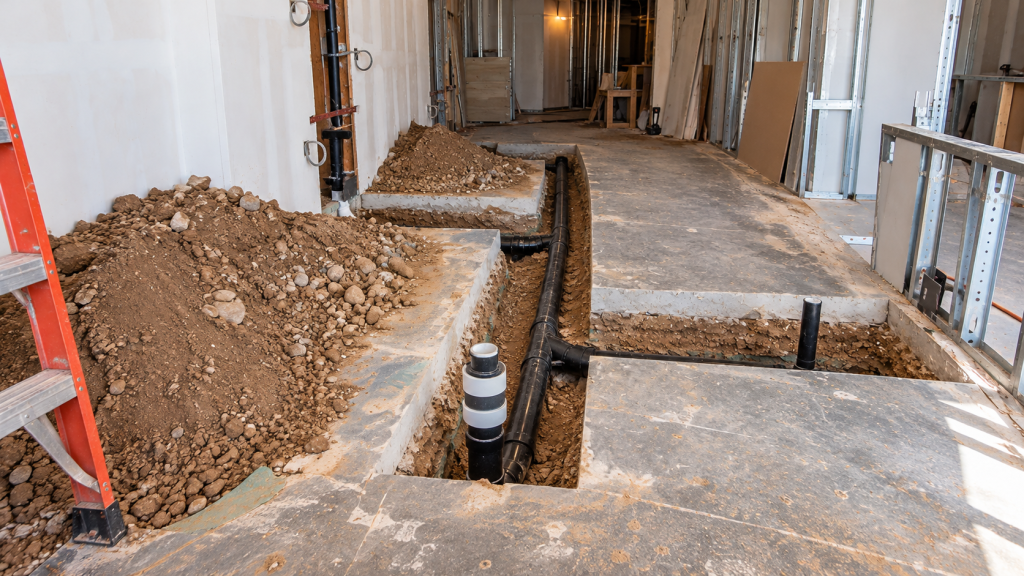
Underground drainage is often the second biggest cost driver. Every foot of drain means saw-cutting, digging, piping, testing, backfill, and concrete patching. Deep or long runs cost more, because trenches get wider and deeper to keep the slope.
Slab type matters too. Post-tensioned slabs need scanning and careful cutting. Some cannot be cut in certain areas at all, which forces longer routes. Meanwhile, older buildings may have cast iron drains that need replacement.
A camera inspection of the existing sewer before bidding is a small cost that can prevent big change orders.
Water Supply Systems
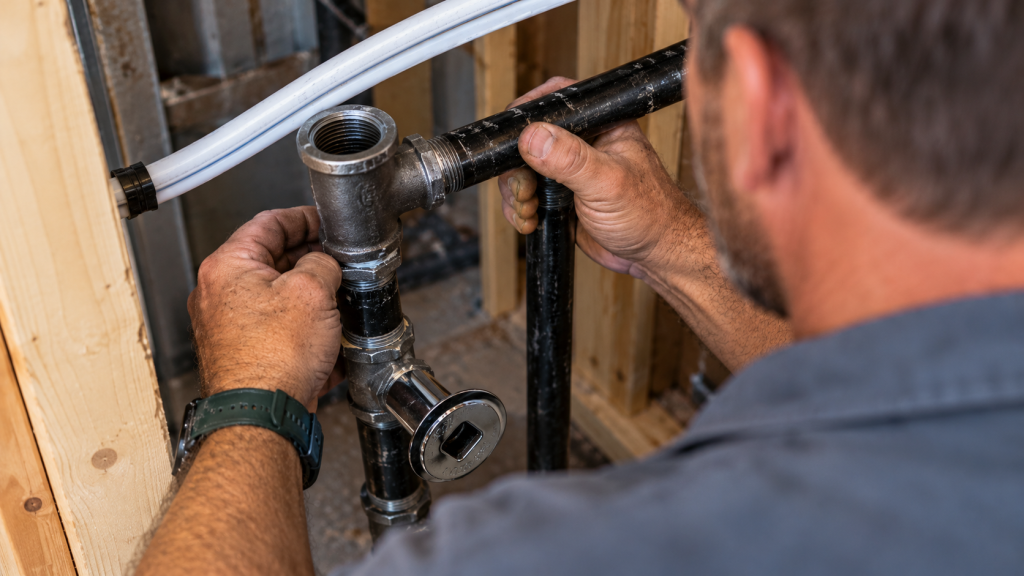
Water supply costs depend on how far the new fixtures sit from the existing service and how much water they need. Small offices may tap into an existing line with little trouble. Restaurants and medical spaces, however, may need a larger service, a new meter, or a booster pump.
Water heating adds another layer. A small office might use a point-of-use heater under each sink. A restaurant may need a large commercial heater with venting, gas piping, and a mixing valve. Recirculation pumps add cost but deliver hot water faster and save water.
Backflow preventers also add cost. Many water providers require them on irrigation, fire, and certain equipment connections. Most also need annual testing.
Special Systems That Add Cost
Certain uses bring special plumbing systems. Each one adds design, materials, labor, and sometimes extra permit review.
- Grease interceptors for restaurants and food service
- Oil and sand separators for auto shops
- Acid waste systems for labs
- Medical gas and vacuum for dental and medical offices
- Eyewash and emergency showers
- Gas piping for kitchens and water heaters
Grease interceptors, in particular, can be a major expense. Large in-ground units need excavation, concrete work, and often coordination with the wastewater utility.
Labor, Access, and Scheduling
Labor makes up a large part of tenant improvement plumbing costs. Rates vary by region and season. In addition, working in occupied buildings often means nights or weekends, which raises labor costs.
Access matters too. Upper floors, tight ceilings, and limited loading dock time slow crews down. Similarly, tight schedules may need larger crews or overtime.
Hidden Tenant Improvement Plumbing Costs
Some costs surprise owners late in the job. Watch for these in every bid:
- Concrete patching and floor leveling after trenching
- Camera inspection and hydro-jetting of old lines
- Permit and impact fees
- Firestopping where pipes pass through rated walls
- Insulation on hot water and cold condensate lines
- Owner-furnished fixtures that still need installation
How to Budget Tenant Improvement Plumbing Costs
- Survey first. Locate the sewer and water service, and camera the existing lines.
- Design smart. Group wet areas near the sewer.
- Get early pricing. Ask a plumber for a budget during design.
- Level bids. Compare scopes line by line.
- Carry a contingency. Plan for hidden conditions, especially in older buildings.
For a broader planning guide, read our post on plumbing cost per square foot.
Ways to Save Without Cutting Quality
Smart choices can lower tenant improvement plumbing costs without hurting performance. For example, stack restrooms back to back to share a wet wall. Use standard commercial fixtures instead of designer models. Reuse sound existing lines when a camera confirms their condition. Finally, choose a water heating strategy that fits the real demand rather than oversizing.
Sample Scenarios
Here are three simple examples to show how costs shift. The details are general, but the pattern holds on most jobs.
Small office: The building has core restrooms. The tenant only adds a break room sink near an existing wet wall. As a result, the plumbing cost stays low, with little or no slab work.
Retail shop: The suite needs one accessible restroom and a mop sink. The sewer stub sits at the back wall, close to the planned restroom. So trenching is short, and the cost stays moderate.
Restaurant: The kitchen needs floor sinks, a grease interceptor, many hand sinks, and a large water heater. The sewer is on the far side of the suite. Therefore, long trenches, special systems, and gas piping push the cost much higher.
Timing and Price
When you build also affects price. Busy seasons can mean higher labor rates and longer lead times. Material prices for copper and fixtures can also shift. So lock in pricing early when you can, and order key items as soon as the design is approved.
Questions to Ask Your Plumber About Price
- What does your price include, and what is left out?
- How did you price the slab cutting and patching?
- Are fixtures included, or only labor?
- What allowance did you carry for hidden conditions?
- How will you price changes once work starts?
Clear answers make bids easier to compare. They also build trust before the job begins.
Who Pays?
In most leases, the tenant pays for plumbing work inside the suite. However, landlords often provide a TI allowance that covers part of it. Some landlords also deliver restrooms or a sewer stub as part of the base building. Read the lease work letter closely to know your share.
FAQ on Tenant Improvement Plumbing Costs
What is the biggest driver of tenant improvement plumbing costs?
Usually restrooms and underground drainage, followed by special systems like grease interceptors.
Can I get a quote before design is done?
Yes. A budget estimate based on a rough layout helps you plan. Then refine it as the design develops.
Get a Clear Plumbing Budget
Good budgets start with good information. Visit our cost guide page for planning ranges, or contact our team for a site review and detailed estimate. The EPA WaterSense program also lists efficient fixtures that can lower long-term water bills.