

Tenant finish vs new construction is a comparison every general contractor should understand before pricing a plumbing scope. Both involve pipes, fixtures, and inspections. Yet the work, the risks, and the schedules differ in important ways. A crew that excels on ground-up buildings may struggle inside an occupied tower, and the reverse is also true. This guide breaks down the key differences so GCs can plan, price, and staff each type of job with confidence.
We will look at scope, existing conditions, sequencing, inspections, cost, and risk. In addition, we will share tips for managing each type well.
The Basic Difference
In new construction, the plumber starts with an empty site. They install the sewer and water service, run underground lines before the slab is poured, and build every system from scratch. The design is fresh, and the plumber controls most of the layout.
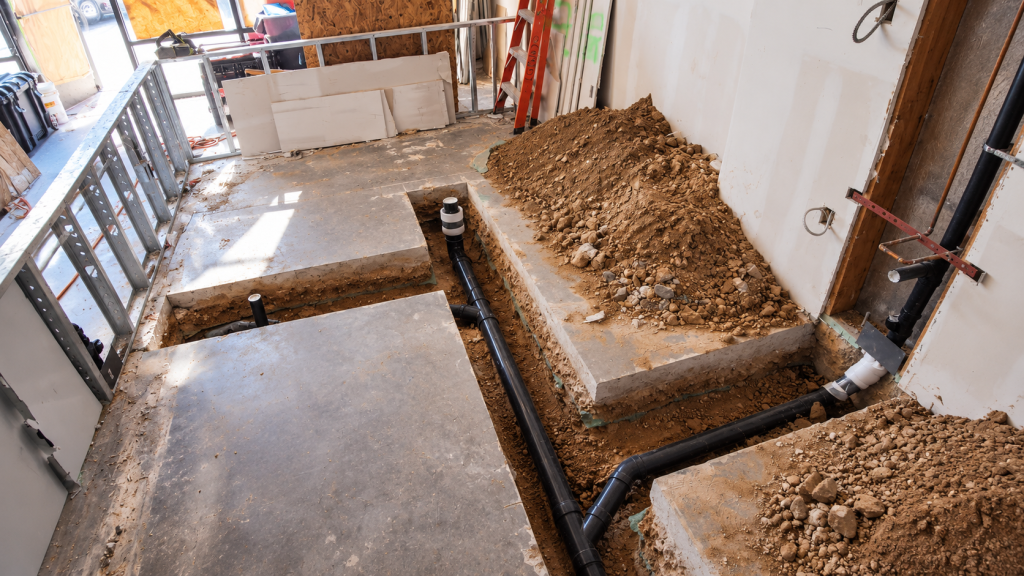
In a tenant finish, by contrast, the building already exists. The plumber works inside a leased space and ties into systems the landlord built years ago. They cut into finished slabs, route pipe around existing structure, and keep neighbors in service. As a result, the work is smaller in scale but often more complex in detail.
Tenant Finish vs New Construction: Scope
New construction scope is broad. It usually includes:
- Site utilities from the street to the building
- Underground drains before the slab pour
- Risers and main lines through every floor
- Water heating plants and booster pumps
- Roof drains and storm piping
- Core restrooms and shell connections for future tenants
Tenant finish scope is narrower. It covers the work inside one suite. Typically, that means slab cutting, new drains to the existing sewer stub, water lines from an existing service, restrooms, break rooms, and fixtures. The landlord’s base building already provides the mains.
Existing Conditions in Tenant Finish vs New Construction
In the tenant finish vs new construction debate, the biggest difference is the unknown. New construction has few surprises below grade, since the plumber installs everything before the slab goes down. Tenant finish work, however, often uncovers problems.
Common surprises include:
- A sewer stub that sits too high or too far away
- Old cast iron with cracks or heavy buildup
- Undersized water service for the new fixtures
- Post-tensioned slabs that limit where you can cut
- Abandoned pipes that do not appear on any drawing
Because of this, a smart GC orders a site survey and a sewer camera inspection before final pricing. In fact, many experienced plumbers will not give a firm number without one. Post-tensioned slabs deserve special care. Scanning the slab before cutting avoids hitting tendons, which can be dangerous and costly.
Sequencing and Schedule
New construction follows a long, steady sequence. Underground work comes early, before the slab. Then risers and mains rise with the structure. In-wall work follows framing on each floor, and fixtures come last.
Tenant finish work is compressed. Everything happens within a few weeks or months. Moreover, the slab is already poured. So the plumber must cut it, trench it, install pipe, pass inspection, and patch it before other trades can move forward. That makes underground plumbing a critical path item on most TI schedules.
Tenant finish vs new construction also differs in work hours. New sites often allow long days. Occupied buildings may limit loud work like saw-cutting to nights or weekends.
Inspections and Approvals
For tenant finish vs new construction, both types need permits and inspections. Still, the process feels different. New construction may have dozens of plumbing inspections across many floors and phases. Tenant finish jobs usually have just a few: underground, rough-in, and final.
However, tenant finish permits can trigger reviews tied to the existing building. For example, a change in use may require more restrooms or a grease interceptor. Adding fixtures may require a check of the existing water service. And some landlords require their own engineer to review tie-ins to base building systems.
Coordination With Building Owners
On new construction, the GC and owner control the site. On a tenant finish, the landlord is a key player. They set work hours, approve shutdowns, and may name approved trades.
Water shutdowns are a big deal. A riser may feed other tenants, so shutting it down needs notice and careful timing. Similarly, tying into a shared sewer stack may need a brief outage. Good plumbers plan these moments with the landlord well in advance.
Tenant Finish vs New Construction Costs
New construction plumbing costs more in total because the scope is larger. Yet per fixture, tenant finish work often costs more. Why? Slab cutting, concrete patching, small quantities, after-hours labor, and tie-ins to old systems all add expense.
Risk also affects price. Tenant finish bids may carry allowances or contingencies for unknown conditions. GCs should review these carefully and confirm what triggers extra cost. For planning, our cost per square foot page outlines common drivers.
Crew Skills and Staffing
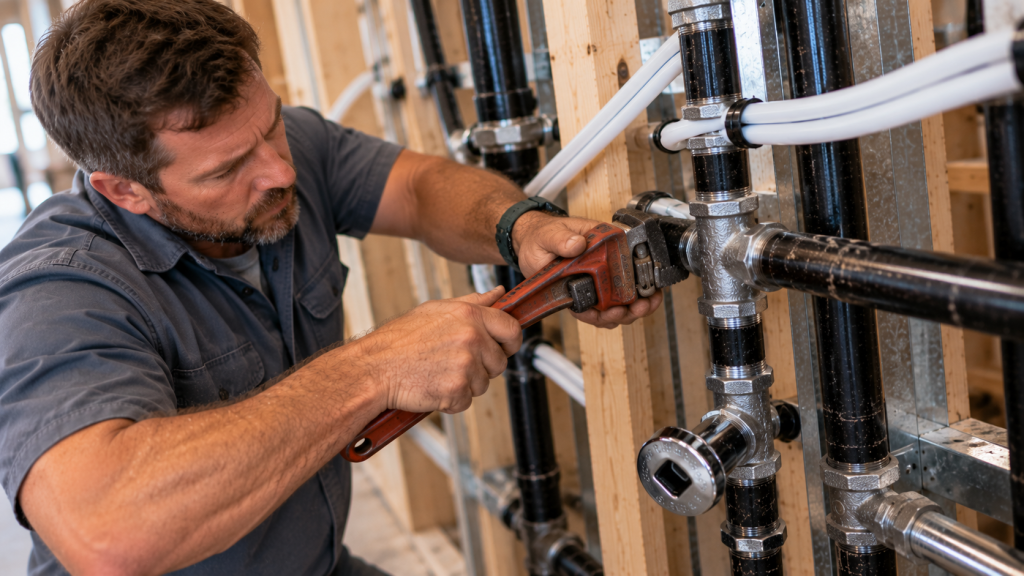
New construction crews often excel at large-scale production. They run long mains, set heavy equipment, and manage big teams. Tenant finish crews, on the other hand, excel at problem-solving in tight spaces. They read old buildings, work around tenants, and adapt quickly.
Both skill sets matter. When you staff a job, match the crew to the work. A small, nimble team often beats a large crew on a busy TI. Meanwhile, a big new build needs depth and strong supervision.
Risk Management for General Contractors
Smart GCs manage plumbing risk differently on each project type. On tenant finish jobs, they:
- Order a camera inspection of existing lines
- Scan slabs before cutting
- Confirm water service size early
- Plan shutdowns with the landlord
- Carry a contingency for hidden conditions
On new construction, they focus on coordination, sequencing, and quality control across many floors. In both cases, early involvement from the plumbing contractor pays off.
Safety on Each Type of Job
Safety risks differ too. On new sites, crews face open trenches, heavy equipment, and work at height on unfinished floors. Fall protection and trench safety rules apply. The Occupational Safety and Health Administration sets the federal rules for both.
Tenant finish jobs bring different hazards. Saw-cutting creates silica dust, so crews need water control and proper masks. Live utilities may sit next to the work area. Also, the public may be close by in lobbies and shared halls. Good plumbers plan for each of these.
A Quick Side-by-Side
- Starting point: empty site versus an existing building
- Scope: whole building versus one suite
- Underground: before the pour versus cut and patch
- Surprises: few versus many
- Schedule: long and phased versus short and tight
- Owner role: developer control versus landlord rules
In short, tenant finish vs new construction is a choice between scale and complexity. Each one rewards a different set of skills.
Which Contractor Fits Your Job?
Ask any plumbing bidder about their mix of work. Firms that do mostly ground-up projects may price TI work high to cover unknowns. In contrast, TI specialists may lack the manpower for a large new build. Choose the firm whose everyday work matches yours. Learn more about our role as a commercial plumbing subcontractor.
FAQ on Tenant Finish vs New Construction
Is tenant finish vs new construction plumbing priced the same way?
Not quite. Tenant finish pricing leans more on site conditions and allowances, while new construction leans on quantities.
Which one needs more inspections?
New construction usually does, because of its larger scope and many phases.
Plan Your Next Plumbing Scope
Knowing the differences helps you price accurately, staff wisely, and avoid surprises. To talk through your next project, contact our team for early input and a clear scope.