

Division 22 plumbing is the part of a construction spec that covers pipes, fixtures, water heaters, and everything else that moves water in and waste out. For general contractors and project managers, it is also a common source of scope gaps and surprise costs. This guide decodes the key sections that apply to commercial tenant improvement construction, explains what they require, and shows how to manage submittals, testing, and closeout.
Use it as a practical reference when you read specs, write subcontracts, or review a plumber’s bid.

What Is Division 22?
In the United States, most commercial specs follow MasterFormat, a system published by the Construction Specifications Institute. MasterFormat groups work into numbered divisions. Division 22 covers plumbing.
Inside it, each section has a six-digit number and a title. Some sections set general rules. Others cover specific products like piping, valves, or fixtures. Together, they tell the plumber what to buy, how to install it, and how to prove it works.
Key Division 22 Plumbing Sections for TI Work
Tenant improvement specs usually include a handful of core sections:
- 22 05 00 – Common work results for plumbing, such as hangers, sleeves, and identification
- 22 07 00 – Plumbing insulation
- 22 11 16 – Domestic water piping
- 22 11 19 – Domestic water piping specialties, including backflow preventers
- 22 13 16 – Sanitary waste and vent piping
- 22 13 19 – Sanitary waste piping specialties, such as floor drains and cleanouts
- 22 33 00 or 22 34 00 – Water heaters
- 22 40 00 – Plumbing fixtures
Restaurant and lab jobs may add sections for grease interceptors, acid waste, or emergency fixtures. Always read the full table of contents.
Division 22 Plumbing Common Work Results
Section 22 05 00 often hides important requirements. For example, it may set rules for pipe hangers, seismic bracing, sleeves through walls, and labels on pipes and valves. It may also require firestopping coordination at rated walls.
Plumbers sometimes skim this section. Yet missing a labeling or bracing rule can lead to a failed punch walk. So review it closely with your plumbing subcontractor.
Piping Requirements
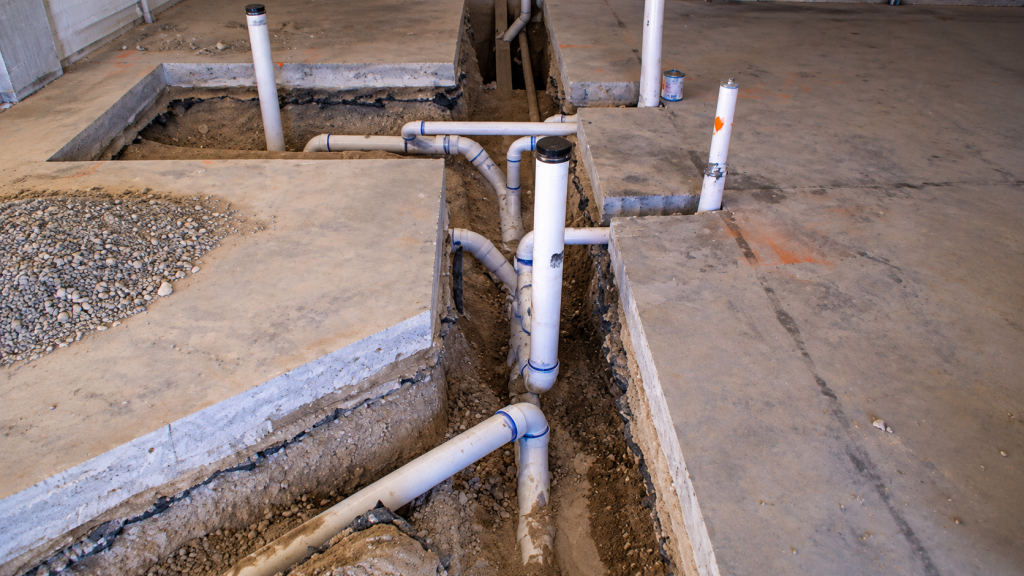
The piping sections name approved materials, joint types, and testing methods. For instance, domestic water piping may allow copper, PEX, or CPVC, each with limits on where it can go. Waste piping may allow PVC below grade but require cast iron in return-air plenums or high-rise stacks.
Clearly, these choices affect cost and schedule. Cast iron costs more and installs slower than plastic. Copper prices swing with the market. Therefore, confirm the allowed materials early and price accordingly.
Fixture Requirements
The fixtures section lists each fixture type by tag, such as WC-1 for a water closet or LAV-1 for a lavatory. It names the maker, model, flow rate, mounting height, and trim. Accessible fixtures get their own tags.
For GCs, two items matter most here. First, lead times. Specialty fixtures can take weeks to arrive. Second, coordination. Wall-hung fixtures need carriers, sensor faucets need power, and accessible fixtures need exact heights. Check each one against the architectural and electrical drawings.
Water Heater Requirements
Water heater sections set capacity, recovery rate, fuel type, efficiency, and safety devices. They may also require mixing valves to limit hot water temperature at hand sinks. In addition, they may call for expansion tanks, seismic straps, and drain pans.
So make sure the electrical or gas service can support the heater. A mismatch here is a common, costly surprise.
Submittals Under Division 22 Plumbing
Before buying anything, the plumber submits product data for review. A typical package includes:
- Pipe, fittings, and valve data
- Fixture cut sheets with trim and finishes
- Water heater and pump data
- Backflow preventer data and approvals
- Drain and cleanout data
- Insulation data
The GC should review the package for completeness before forwarding it to the architect. Missing items lead to rejections and delays.
Division 22 Plumbing Testing Rules
Division 22 plumbing sections spell out how systems must be tested. Waste and vent piping often gets a water test. Water piping gets a pressure test for a set time. Backflow devices need a field test by a certified tester. New water systems may need flushing and disinfection before use.
These tests usually happen before inspections. So build them into the schedule.
Scope Gaps to Watch
Some work sits between divisions. As a result, it can fall through the cracks. Common gaps include:
- Slab cutting and patching (often Division 03 or 02)
- Firestopping at pipe penetrations (often Division 07)
- Power to sensor faucets and water heaters (Division 26)
- Condensate drains from HVAC units (Division 23)
- Gas piping (sometimes Division 22, sometimes 23)
- Owner-furnished equipment connections
A scope matrix attached to each subcontract settles these questions before work starts.
Closeout Requirements
Finally, at the end of the job, Division 22 usually calls for a closeout package. It often includes as-built drawings, operation and maintenance manuals, warranties, test reports, and a list of valve locations. Some specs also require owner training on water heaters and controls.
Start collecting these documents early. Waiting until the last week makes closeout slow and stressful.
How to Read a Spec Section Fast
Every spec section follows the same three-part layout. Part 1 covers general items. It lists submittals, quality rules, and warranties. Part 2 covers products. It names makers, models, and materials. Part 3 covers execution. It explains how to install, test, and clean the work.
Once you know this layout, reading gets much faster. To price a job, start with Part 2. When you build the schedule, look at Part 1 and the tests in Part 3. Field crews care most about Part 3. In short, you do not need to read every word on day one. Instead, read the parts that matter for your task.
Why Specs and Drawings Disagree
Sometimes the spec says one thing and the drawing says another. For example, the spec may call for cast iron, while the plan notes show plastic. When this happens, do not guess. Instead, send a short question to the architect. Most contracts say which one wins, but a quick answer avoids a costly fight.
Keep a log of these questions. It helps the whole team see open items at a glance. It also protects you if the issue comes up again at closeout.
Substitutions and Equals
Specs often name a product “or equal.” That lets the plumber offer a different brand that meets the same need. Still, the architect must approve it. So submit any swap early, with data that shows it matches the named product. Late swaps can stall the whole submittal.
Tips for General Contractors
- Read every Division 22 section, not just piping and fixtures.
- Build a scope matrix for gray areas.
- Push early submittals for long-lead fixtures and heaters.
- Coordinate power and gas for water heaters.
- Schedule tests before inspections.
- Collect closeout documents as you go.
FAQ on Division 22 Plumbing
Does Division 22 plumbing include gas piping?
Sometimes. Specs vary, so check whether gas sits in Division 22 or 23 on your project.
Who prepares Division 22 submittals?
The plumbing subcontractor prepares them. The GC reviews and forwards them to the design team.
Partner With a Division 22 Specialist
Clear specs and careful review keep plumbing on budget and on time. Visit our Division 22 contractor page, or ask our estimators to review your next spec.