
Denver commercial plumbing has to handle a climate that swings from sunny 90-degree afternoons to sub-zero winter nights. On top of that, the city mixes century-old brick warehouses with brand-new glass towers. Each building brings its own plumbing quirks. This guide covers commercial plumbing installation and renovation for Denver tenant improvements, from freeze protection and older pipes to permits, backflow rules, and scheduling.
Tenants, landlords, and general contractors can use it to plan a build-out that works through every season.
The Denver Building Mix
First, Denver’s commercial stock is unusually varied. Lower Downtown and the River North Art District are full of converted brick warehouses and factories. Downtown and Cherry Creek feature modern office towers. The Denver Tech Center and suburban corridors add business parks and newer retail centers.
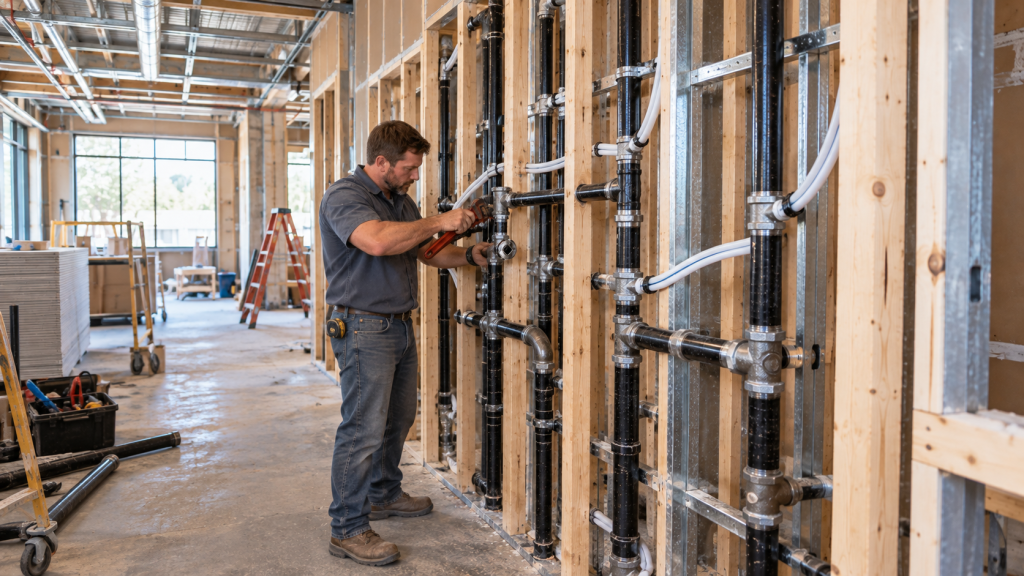
Of course, older buildings often have charm and character. Yet they also hide aging cast iron drains, galvanized water lines, and odd pipe routes. Newer buildings usually have cleaner systems, though landlords may enforce strict standards for materials and tie-ins.
What Denver Commercial Plumbing Includes
Most tenant improvements in Denver draw from this scope:
- Restrooms and accessible fixtures
- Staff pantries and espresso stations
- Restaurant plumbing with grease control
- Water heaters sized for the use
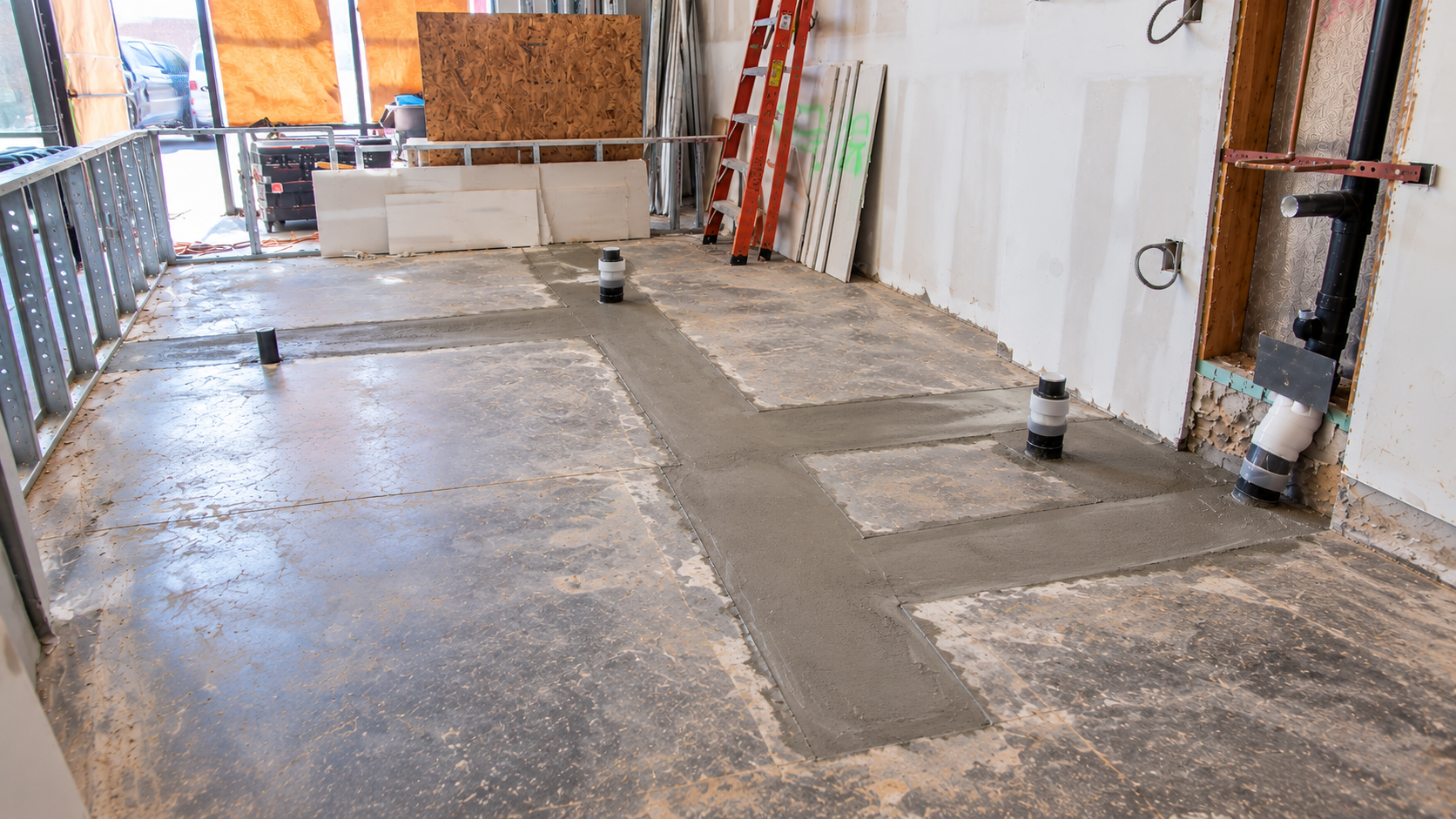
- Underground drains and slab cutting
- Backflow preventers on required connections
- Freeze protection on exposed or exterior lines
Specialty uses, such as breweries, labs, and medical offices, can add process drains, special waste systems, and extra hot water.
Freeze Protection Matters Here
In fact, cold snaps are a fact of life on the Front Range. A pipe that freezes can split, then flood the space when it thaws. Therefore, Denver commercial plumbing must keep water lines out of cold spaces whenever possible.
Common strategies include:
- Routing pipes inside heated spaces, not exterior walls
- Insulating pipes near loading docks and entries
- Adding heat trace on lines that must pass through cold areas
- Using frost-free hose bibs on exterior walls
- Protecting backflow devices with insulated enclosures
Also, vacant spaces deserve special care. If the heat goes off between tenants, pipes can freeze fast. So landlords should keep minimum heat on or drain the lines.
Denver Commercial Plumbing in Older Buildings
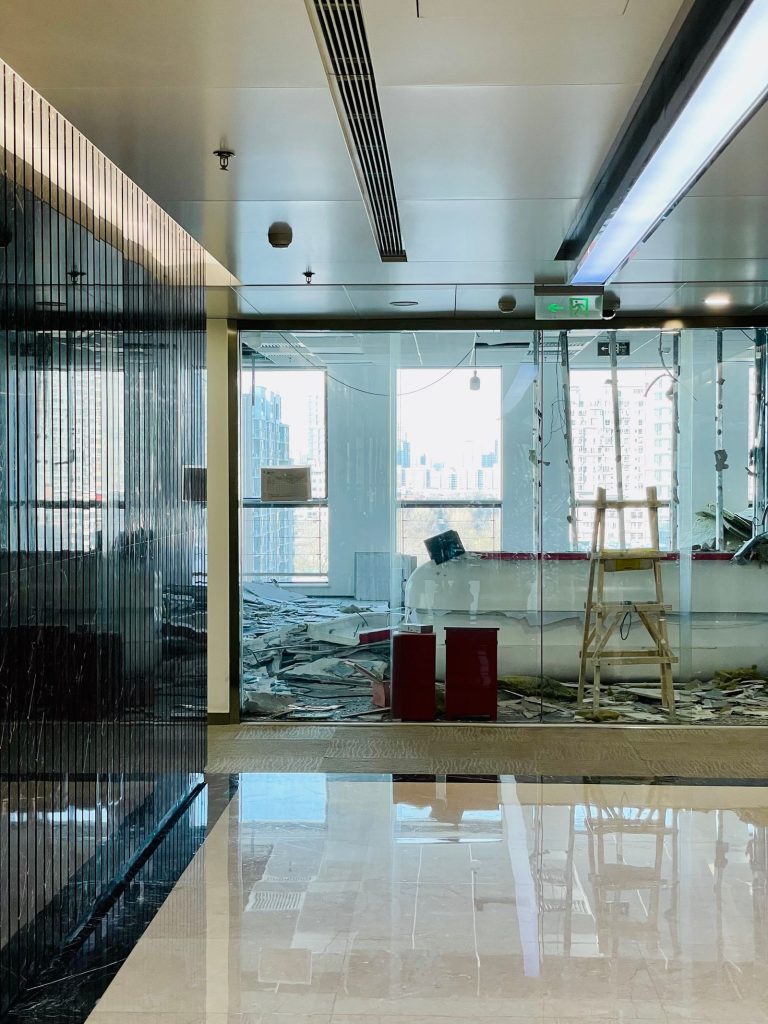
Still, warehouse conversions come with plumbing surprises. Old cast iron drains may be cracked or full of scale. Galvanized water lines may have rusted inside. In addition, drawings may be missing or wrong.
So start with a sewer camera and a look at exposed water pipe. With that in hand, the owner can choose to keep, reline, or rip out each section. In many cases, a renovation is the right time to replace aging water lines entirely.
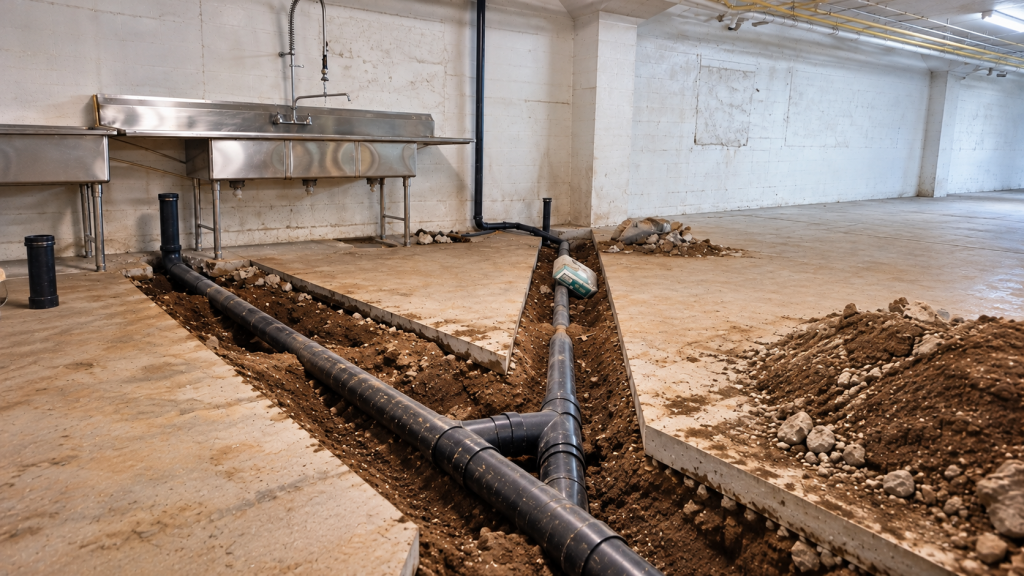
Thick concrete floors and heavy timber or steel structure also shape the work. Trenching through old slabs takes time, and some floors hide surprises like old foundations or utility tunnels.
Restaurants and Breweries
Meanwhile, Denver’s food and craft beer scene keeps growing. These businesses need serious plumbing. Restaurants need grease interceptors, floor sinks, hand sinks, and plenty of hot water. Breweries add trench drains, process water, and sometimes pretreatment for high-strength waste.
Wastewater rules for these uses can be strict. Plan the system with the local wastewater utility and health department early, since their reviews can affect the schedule.
Backflow Rules for Denver Commercial Plumbing
Backflow preventers stop dirty water from flowing back into the public supply. Denver’s water provider, Denver Water, runs a backflow prevention program. Certain connections, such as irrigation, fire systems, and some equipment, need approved devices. Each device also needs a yearly check by a certified tester.
So show them on the drawings and in the budget early. They take space, often need heated enclosures, and require access for testing.
Permits and Inspections in Denver
Most Denver commercial plumbing work needs a permit through the city’s Community Planning and Development department. Typically, the plumbing sheets travel with the full permit package. Restaurants may need additional health department review.
Colorado licenses plumbers at the state level, so confirm that your contractor and their workers hold the right licenses. Expect checks below the slab, before drywall, and at the end.
Scheduling Through Denver Seasons
Naturally, weather affects some plumbing tasks. Exterior work, roof vents, and site utilities are harder in winter. Snow can delay deliveries and inspections. Meanwhile, interior work can continue year-round once the space is enclosed and heated.
Plan exterior tie-ins and roof penetrations for milder months when possible. In addition, order fixtures and water heaters early, since winter storms can slow freight.
Water Efficiency
In addition, Colorado values water conservation. Efficient fixtures and heaters cut both use and bills. Many owners choose sensor faucets and high-efficiency toilets as a standard. These choices can also support green building goals.
Denver Commercial Plumbing Costs
Overall, costs depend on building age, layout, use, and season. Older buildings with failing pipes cost more to renovate. Restaurants and breweries cost more than offices. Winter work may add heating and protection costs.
To control costs, survey the building early, keep wet areas near existing drains, and reuse sound pipe where a camera inspection confirms its condition.
High Altitude and Water Heaters
Denver sits a mile above sea level. That thin air affects gas water heaters. Burners need the right setup to run clean and safe at altitude. So make sure the heater is rated or adjusted for high elevation. A heater set up for sea level may run poorly or make too much carbon monoxide.
Venting matters too. Gas heaters need proper flues and fresh air. Also, check that the space has enough room around the unit for service. These details keep Denver commercial plumbing safe and efficient.
Snowmelt, Roof Drains, and Storm Lines
Spring snowmelt sends a lot of water off roofs. In older buildings, roof drains and storm lines may be clogged or cracked. When a tenant build-out opens the ceiling, it is a good time to check them. A blocked roof drain can back up and leak right into a new suite.
A quick camera check and a cleaning can prevent that. In short, look up as well as down during a Denver renovation.
Restrooms That Handle Winter
Winter adds wear to Denver restrooms. Snow and salt come in on boots. Floors get wet and slick. So floor drains and tough finishes help a lot. Also, place restrooms away from cold outside walls when you can, so pipes stay warm. Hand dryers or towel units near the door help guests dry off fast. Finally, pick faucets with sturdy handles, since gloved hands are rough on trim.
Choosing a Denver Plumbing Partner
Pick a contractor with recent Denver experience in buildings like yours. Ask how they handle freeze protection, old cast iron, and backflow programs. Confirm state licensing and insurance. Then call references from local general contractors.
Our crews support build-outs across the metro area. Visit our Denver plumbing page for details.
FAQ on Denver Commercial Plumbing
Does Denver commercial plumbing need heat trace?
Only where pipes must pass through cold spaces. Routing pipes inside heated areas is the first choice.
Do I need a backflow preventer?
Many commercial connections do. Your plumber and the water provider can confirm which ones apply.
Plan Your Denver Build-Out
Smart planning keeps your Denver space dry, warm, and running in every season. To discuss your project, reach our Denver plumbing team today.