
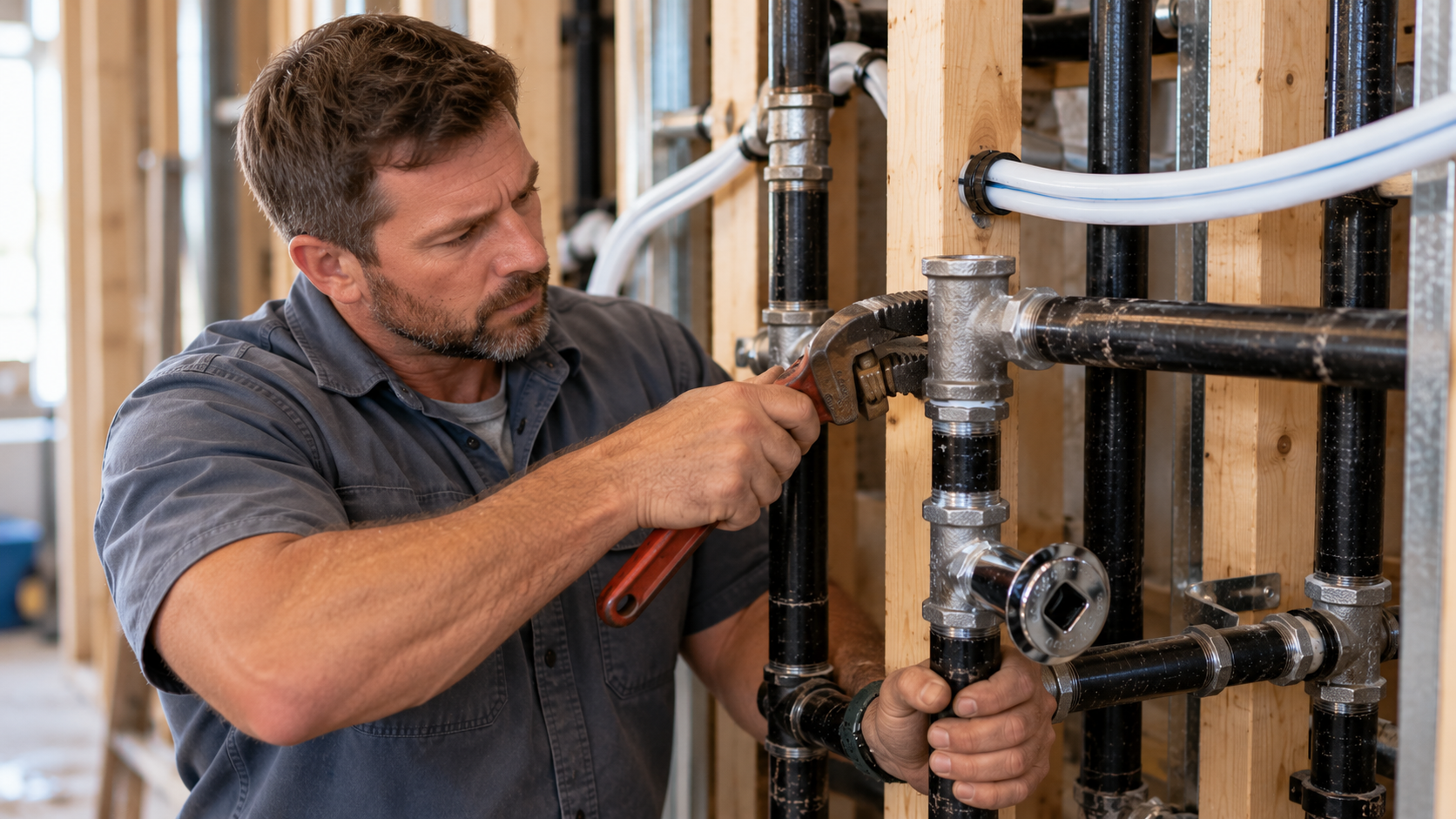
Scottsdale commercial re-piping often happens hand in hand with a tenant improvement. When a suite is gutted for a new tenant, the walls and ceilings are already open. That makes it the perfect moment to swap tired water lines for new ones. Done at the same time, the upgrade costs less, disrupts less, and leaves the new tenant with a system built to last. This guide explains when to re-pipe during a build-out, which materials work best, and how to plan the work around Scottsdale’s hard water and busy centers.
Landlords, tenants, and contractors will all find practical tips here.
Why Pair Re-Piping With a Tenant Improvement?
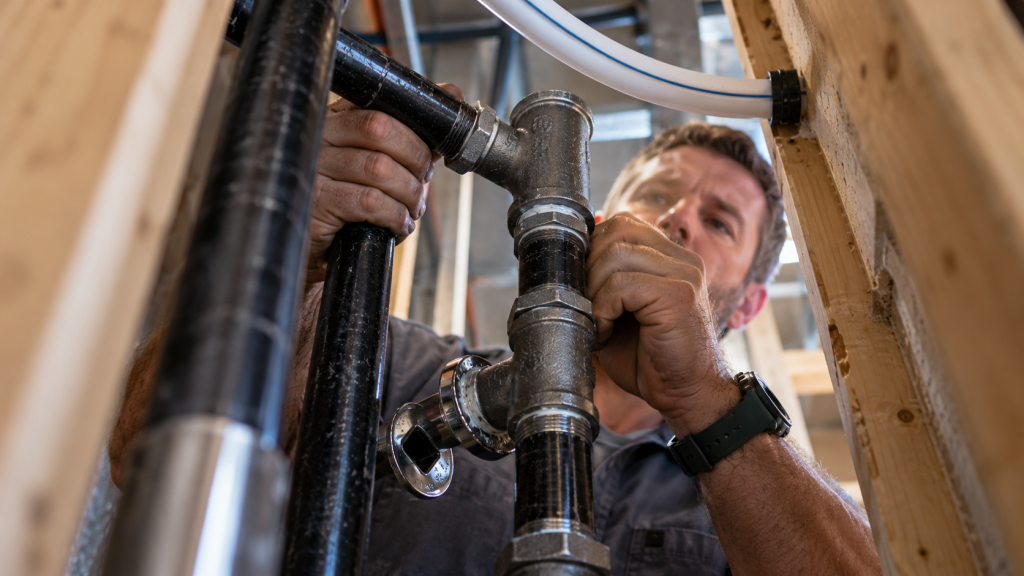
Normally, re-piping an occupied space is messy. Crews must open finished walls, work around furniture, and patch everything afterward. In contrast, a tenant improvement already strips the suite down to studs and slab. So the extra cost of new pipe is mostly materials and a little extra labor.
Timing helps in other ways too. The new tenant starts with reliable water, fewer leaks, and better pressure. Meanwhile, the landlord avoids a future disruption that could upset that tenant. In short, Scottsdale commercial re-piping during a build-out is often the smartest money spent on the job.
Signs the Old Lines Should Go
Not every build-out needs Scottsdale commercial re-piping. However, these clues suggest it is time:
- Galvanized steel water lines from decades past
- Copper with green crust or pinhole patches
- Low flow at fixtures far from the main
- Rust-colored water after a weekend
- Many repair clamps on exposed pipe
- Old polybutylene, which has a poor record
A plumber can cut a short sample to look inside. Heavy scale or thin walls are strong signs that replacement is wise.
Scottsdale’s Hard Water Problem
Scottsdale water carries high mineral levels, like much of the Valley. Over time, calcium builds up inside pipes and narrows the flow. It also wears out valves, clogs aerators, and fills water heaters with sediment.
That is why Scottsdale commercial re-piping projects often add water treatment. A suite softener, scale filters on key gear, or both help the new lines stay clean inside. In addition, cleaner water spares the fancy fixtures this city is known for.
Materials for Scottsdale Commercial Re-Piping
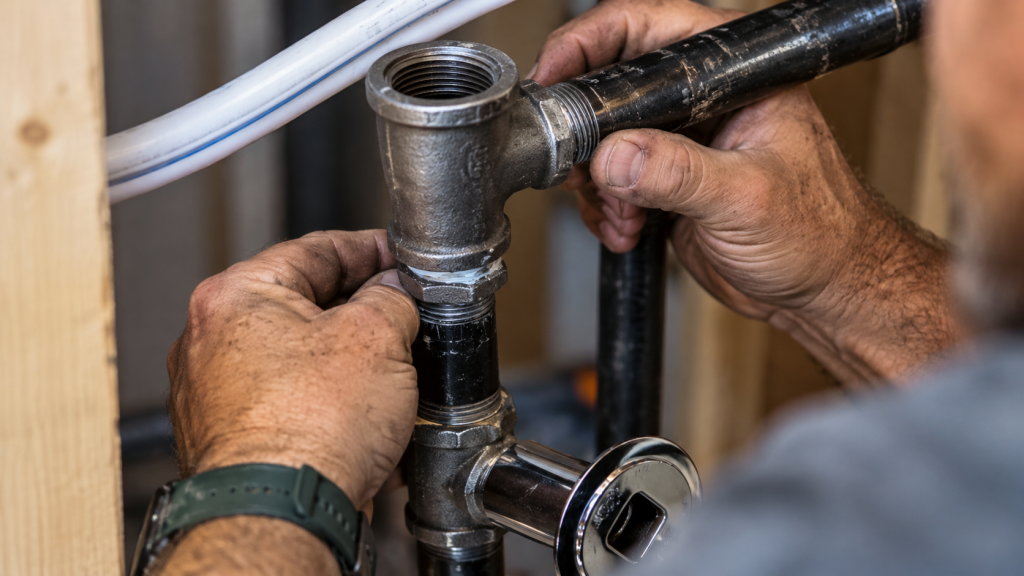
For Scottsdale commercial re-piping, each pipe material brings its own strengths:
- Copper has a long history, handles heat well, and meets most building rules.
- PEX bends around corners, installs quickly, and resists scale buildup.
- CPVC keeps costs low and resists corrosion, though it needs care near heat.
- Stainless steel with press fittings offers top durability at a higher price.
Landlord standards may limit choices. Some buildings, for instance, require copper or stainless in shared spaces. Always check the building rules before ordering.
Planning Scottsdale Commercial Re-Piping
When re-piping rides along with a build-out, planning stays simple. Still, a few steps matter.
- Survey. Map the existing lines and find where the suite connects to the building main.
- Design. Size new lines for the new fixtures, not the old ones.
- Permit. Include the re-pipe in the TI permit set.
- Remove old pipe. Cap and cut out abandoned lines so they do not cause confusion later.
- Install. Run new lines while walls and ceilings are open.
- Test. Pressure test before connecting to the building supply.
- Connect. Tie in during a short shutdown planned with the landlord.
- Flush. Clear debris and, when required, disinfect the new lines.
Shared Risers and Neighbors
In multi-tenant buildings, a suite’s water often comes from a shared riser. Replacing pipe inside the suite is easy. Replacing the riser, however, affects other tenants. So coordinate any riser work with the landlord and plan shutdowns for nights or weekends.
In addition, give neighbors written notice. Even a two-hour outage can upset a dentist or a café if it comes as a surprise.
Permits and Inspections in Scottsdale
The City of Scottsdale typically requires a permit for water piping changes. Inspectors check materials, supports, testing, and backflow protection. When the re-pipe is part of a TI, it usually shares inspections with the rest of the plumbing work.
Scottsdale Commercial Re-Piping Costs and Savings
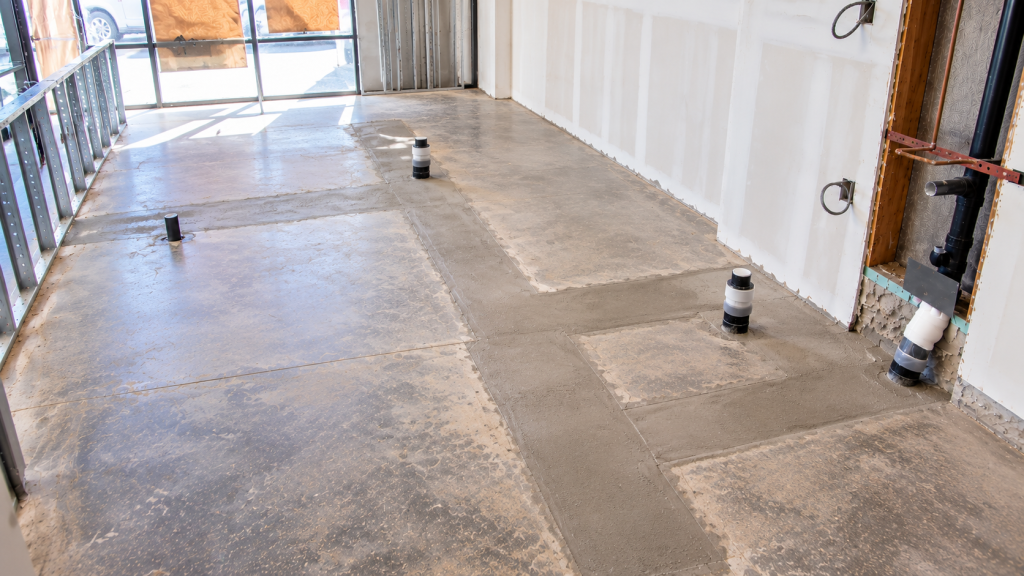
Costs for Scottsdale commercial re-piping depend on suite size, pipe material, and how far the new lines must run. Pairing the work with a build-out cuts labor, since walls are already open. Also, patching and painting costs mostly disappear, because the new walls get finished anyway.
Long-term savings matter too. Fewer leaks mean fewer emergency calls and less water damage. Better flow and cleaner water mean happier tenants. In fact, many landlords view a re-pipe as a selling point when leasing.
Upgrades to Consider at the Same Time
While the walls are open, think about other upgrades:
- New shutoff valves for each restroom and kitchen
- Pressure-reducing valves where pressure runs high
- Recirculation lines for faster hot water
- Leak sensors near water heaters and under sinks
- Insulation on hot water lines
Each one adds value for little extra cost during a build-out.
A Simple Example
Here is how this plays out on a real suite.
Picture a 4,000-square-foot suite in the Airpark. The last tenant was an insurance office. Now a dental practice is moving in. The walls are coming down anyway, so the team checks the old water lines.
A short sample shows heavy scale inside the copper. Pressure at the far restroom is weak. So the owner approves Scottsdale commercial re-piping as part of the build-out. Crews run new lines sized for the dental chairs, sinks, and sterilization room. They add a softener and a new water heater. As a result, the dentist opens with strong, clean water, and the landlord avoids a future shutdown.
Hot Water Tips for Scottsdale Commercial Re-Piping
New pipe is a chance to fix slow hot water too. In many older suites, staff wait a long time for warm water at the far sink. That wastes water and time. A small recirculation pump solves it. It keeps hot water moving in a loop, so it arrives fast at every tap.
Pipe insulation helps as well. Wrapped hot lines lose less heat on the way. In addition, a mixing valve near the heater keeps hand sinks at a safe temperature. These are low-cost add-ons when the walls are already open.
What Happens to the Old Pipe?
Old lines should not be left behind in walls and ceilings. Abandoned pipe confuses future plumbers and can hide leaks. So crews cut it out where they can reach it and cap it at the main. Copper scrap is often recycled, which may offset a little of the cost.
Choosing a Contractor
Pick a plumber with Scottsdale build-out experience. Ask how they handle shared risers, hard water, and landlord rules. Then confirm their Arizona license and insurance. Our fit-out plumbing services page explains how we approach this work.
FAQ on Scottsdale Commercial Re-Piping
Is Scottsdale commercial re-piping required during a TI?
Not by code in most cases. Still, it is often the smartest time to do it.
Which material lasts longest?
Stainless steel and copper have long lives. PEX resists scale well. The best pick depends on your building and budget.
Upgrade While the Walls Are Open
A build-out is a rare chance to fix aging water lines at low cost. To plan new piping as part of your Scottsdale renovation, send us your drawings for a review.