
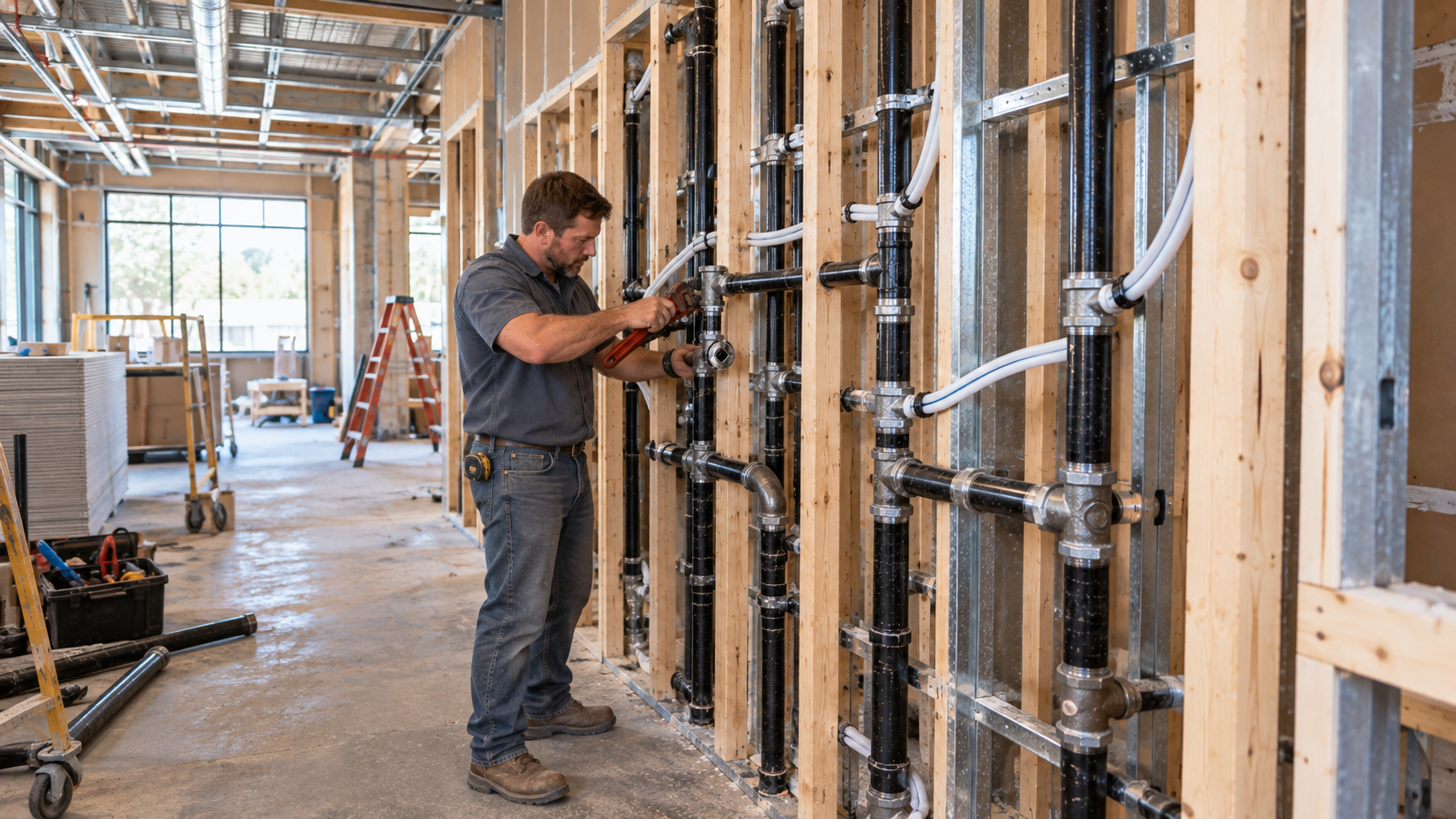
Phoenix commercial re-piping replaces the water lines that feed a building’s sinks, restrooms, kitchens, and equipment. Over the years, hard water, heat, and age take a toll on pipe. Leaks pop up, pressure drops, and repair bills climb. At some point, patching no longer makes sense. This guide explains how to spot that point, what materials and methods to consider, and how to replace water supply lines in an occupied commercial building with as little disruption as possible.
Property managers, building owners, and facility teams can use it to plan a project that protects tenants and budgets alike.
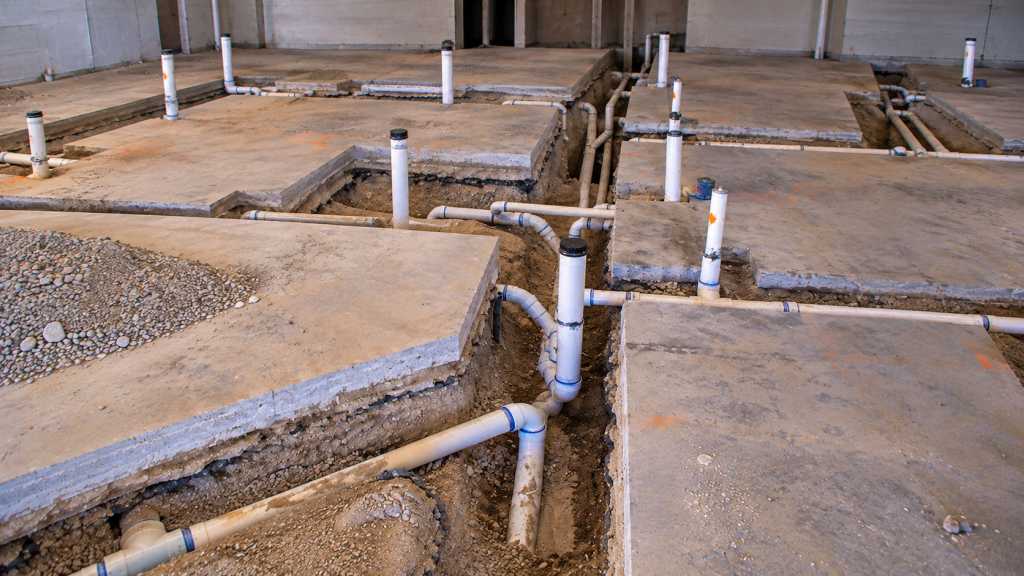
Why Phoenix Buildings Need Re-Piping
Of course, water supply pipe does not last forever. In the Valley, it often wears out faster than owners expect. Three local factors drive that trend.
First, Phoenix water is very hard. Minerals coat the inside of pipes and narrow the flow path. Second, many older buildings use galvanized steel, which rusts from the inside out. Third, extreme heat can stress plastic pipe and fittings in hot attics and ceilings.
Together, these forces shorten pipe life. As a result, Phoenix commercial re-piping is common in buildings from the 1970s, 1980s, and early 1990s.
Warning Signs Your Water Lines Are Failing
Fortunately, most buildings give clear signals before a major failure. Watch for these:
- Frequent pinhole leaks in copper lines
- Rusty or brown water from faucets
- Low pressure on upper floors or far fixtures
- Water heaters filling with sediment quickly
- Stains on ceilings below pipe runs
- Rising repair costs year after year
Any one of these may justify a repair. However, several together usually point to a bigger problem. At that stage, an assessment makes sense.
Step 1: Assess the System
Before planning a Phoenix commercial re-piping job, a plumber should study the existing system. They review old drawings, inspect exposed pipe, and cut out small samples to check the inside walls. They may also test water pressure at several points.
This assessment answers key questions. Is the whole system failing, or only certain zones? Are the mains sound while the branches are worn? Which areas serve the most critical tenants? With these answers, the owner can choose between a full re-pipe and a phased approach.
Pipe Materials for Phoenix Commercial Re-Piping
Today, several materials work well for commercial water supply. Each has pros and cons.
- Copper: Long track record, fire resistant, and widely accepted. It costs more and can still suffer from aggressive water.
- PEX: Flexible, fast to install, and resistant to scale. Some buildings limit its use in certain spaces.
- CPVC: Low cost and corrosion resistant. It needs care in hot spaces and with certain fire-stopping products.
- Stainless steel: Very durable, with press fittings that speed installation. It often costs the most.
The right choice depends on the building, the water, the budget, and local code. A good plumber will explain the tradeoffs clearly.
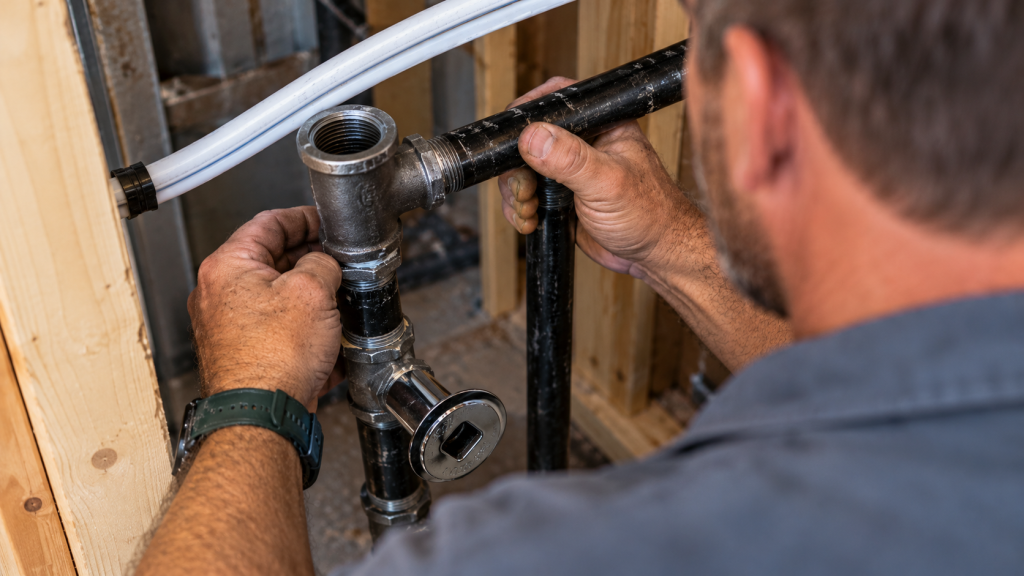
Planning Phoenix Commercial Re-Piping in Occupied Buildings
In practice, most re-pipes happen while tenants stay in place. That means water shutdowns, noise, and wall openings must be managed carefully.
Good planning includes:
- Splitting the building into zones that can be shut off separately
- Scheduling shutdowns at night or on weekends
- Giving tenants written notice well ahead of time
- Running temporary water to critical users when needed
- Protecting floors, furniture, and equipment
- Patching and painting walls promptly
Restaurants, clinics, and labs need extra care, because even short outages can disrupt their work. Talk with these tenants early and build the schedule around their needs.
The Re-Piping Process Step by Step
- Design and permit. The plumber or engineer lays out new routes and sizes. Then the team submits for a permit.
- Prepare the zone. Crews protect the area and open walls or ceilings where needed.
- Install new pipe. They run new lines alongside the old ones when possible.
- Test. New pipe holds pressure before any connection to the live system.
- Cut over. During a planned shutdown, crews switch fixtures to the new pipe.
- Flush and disinfect. The new system is flushed and, when required, disinfected.
- Restore finishes. Walls and ceilings are patched, painted, and cleaned.
As a result, running new pipe beside the old keeps downtime short. The actual cutover may take only a few hours per zone.
Permits and Inspections
In most cases, Phoenix commercial re-piping needs city approval first. Permits come from the Phoenix PDD office. The inspector checks pipe materials, supports, testing, and backflow protection. On larger projects, inspections may happen zone by zone.
Water Treatment With Phoenix Commercial Re-Piping
A re-pipe is a great time to fight hard water. Whole-building softening, scale filters, or targeted treatment for kitchens and water heaters can extend the life of the new pipe. In addition, they protect fixtures and equipment. Talk with your plumber about the right level of treatment for your tenants.
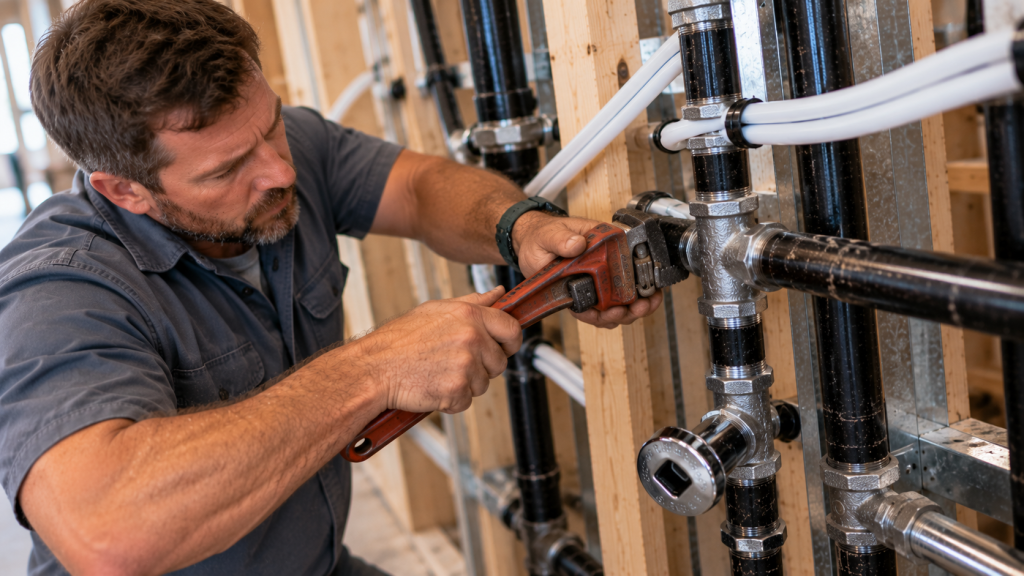
What Phoenix Commercial Re-Piping Costs
Several factors shape the price:
- Building size and number of floors
- Pipe material chosen
- Number of fixtures and branch lines
- Access to pipe routes
- Night and weekend labor
- Wall and ceiling repair
- Water treatment add-ons
Also, phasing can spread costs over time. For example, an owner may re-pipe the worst zones first and plan the rest over the next budget cycle.
Benefits Beyond Fewer Leaks
Better still, a new system does more than stop leaks. It often restores strong water pressure, cleaner water, and faster hot water delivery. It can also lower insurance risk and improve tenant satisfaction. Moreover, it adds value when the building is sold or refinanced.
Full Re-Pipe or Phased Re-Pipe?
Owners often ask whether to replace everything at once. The answer depends on the building and the budget. A full re-pipe fixes every problem in one project. It also means one round of disruption and one permit. However, it costs more up front.
A phased plan spreads the work over months or years. For example, crews may replace the worst floor first, then move on as funds allow. This keeps cash flow steady. Still, it means more shutdowns over time, and old pipe may keep failing in the waiting zones. A good plumber will help you weigh both paths.
Protecting Tenants During the Work
Tenants care most about three things: water, noise, and mess. So the plan should address each one. Water outages stay short and happen after hours. Loud cutting happens when offices are empty. Floors and furniture get covered, and crews clean up daily.
Clear notices help too. Post the schedule in lobbies, email it to tenant contacts, and give updates if anything changes. When tenants know what to expect, complaints drop sharply.
Choosing a Re-Piping Contractor
Above all, look for a firm with experience in occupied commercial buildings. Ask how they plan shutdowns, protect tenants, and handle wall repairs. Confirm their Arizona license and insurance. Also, ask for references from other property managers.
For broader Valley plumbing support, visit our Phoenix plumbing page.
FAQ on Phoenix Commercial Re-Piping
How long does Phoenix commercial re-piping take?
It depends on size. A small building may take a few weeks. A large one may be phased over several months.
Will tenants lose water?
Only during short, planned cutovers. Good planning keeps these brief and scheduled at quiet times.
Plan Your Re-Pipe
Replacing aging water lines protects your building and your tenants. To schedule an assessment or discuss options, reach our plumbing team today.