
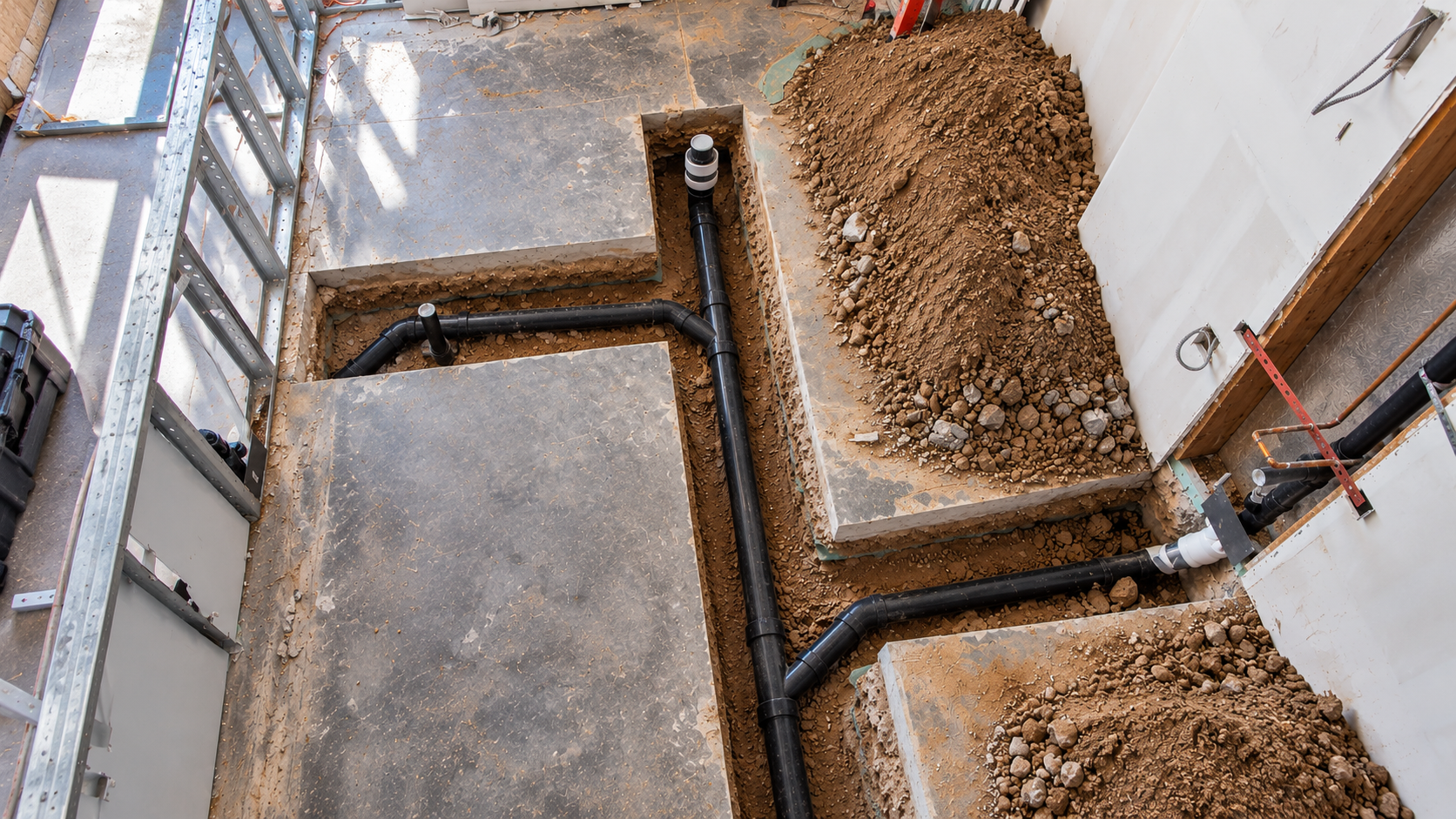
Phoenix commercial plumbing contractors work on everything from small suite build-outs to large ground-up buildings. The skills overlap, yet the day-to-day work looks very different. A tenant improvement crew cuts slabs and ties into old systems. A new construction crew installs site utilities and runs risers through every floor. This guide explains how local contractors handle both types of work and what owners and builders should check before hiring.
So use it to plan your project, compare bids, and choose a partner that fits your job.
What Phoenix Commercial Plumbing Contractors Do
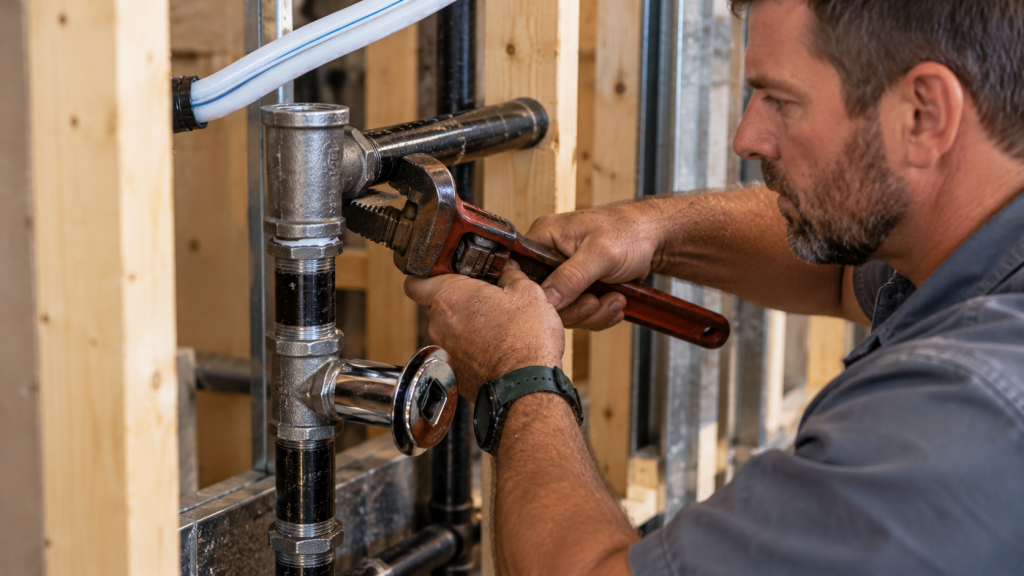
In short, commercial plumbers design, install, test, and maintain the water and drainage systems in non-residential buildings. Their typical services include:
- Underground sanitary and storm drainage
- Domestic hot and cold water piping
- Restrooms, break rooms, and kitchens
- Water heaters and booster pumps
- Grease interceptors and special waste systems
- Backflow prevention and testing
- Gas piping for kitchens and equipment
- Repairs, re-piping, and upgrades
However, some firms focus on one type of work. Others offer the full range. Knowing a firm’s focus helps you pick the right one.
How Phoenix Commercial Plumbing Contractors Handle TI Work
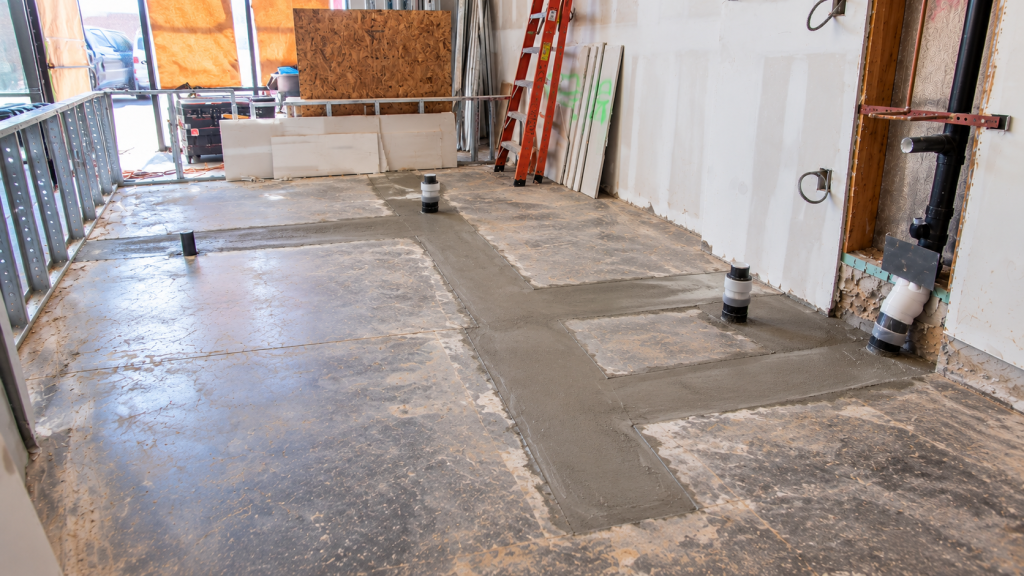
In fact, tenant improvements make up a large share of commercial plumbing in Phoenix. Businesses lease space in offices, retail centers, and industrial parks, then build it out to suit their needs.
On these jobs, Phoenix commercial plumbing contractors must:
- Verify the existing sewer stub and water service
- Scan and cut slabs without hitting post-tension cables
- Work around neighboring tenants
- Coordinate tightly with framers, electricians, and HVAC crews
- Meet fixed opening dates tied to lease terms
TI work rewards flexibility and problem-solving. Crews must adapt to what they find below the floor and inside old walls. For more on this work, see our Phoenix tenant improvement plumbing page.
How Phoenix Commercial Plumbing Contractors Handle New Builds
In addition, Phoenix sees steady new construction, from apartments and offices to warehouses and manufacturing plants. New construction plumbing starts at the property line.
Typical steps include:
- Tap the city main and bring the service to the site
- Lay drains in the dirt while the pad is still open
- Stand risers and run mains floor by floor
- Set the water heating plant
- Pipe the roof and storm drains
- Build core restrooms and leave stubs for tenants
- Fixtures, testing, and final inspections
These jobs need strong crews, careful sequencing, and good supervision. They also involve heavy coordination with site contractors, concrete crews, and structural trades.
Phoenix Conditions That Shape Plumbing
Naturally, local conditions affect how Phoenix commercial plumbing contractors work. Three stand out.
Hard water. Phoenix water carries high mineral levels. It builds scale in pipes, heaters, and fixtures. Contractors often recommend water treatment for kitchens and equipment.
Extreme heat. Summer highs often pass 110 degrees. Crews start early, protect materials from sun, and plan heavy work for cooler hours. Pipes in hot ceilings may need insulation.
Caliche soil. Many Valley sites have caliche, a hard, cement-like soil layer. It can make trenching slow and costly. Experienced contractors plan for it when they price underground work.
Licensing and Insurance in Arizona
Arizona requires contractors to hold a license from the Arizona Registrar of Contractors. Commercial plumbing uses specific license classes. Before hiring, look up the contractor’s license and check for complaints.
Also, ask for proof of coverage. Your contract and lease will list the limits you need. Larger projects may also require bonds.
How to Compare Bids
Bids from Phoenix commercial plumbing contractors can differ widely. So level them line by line before choosing. Check for:
- Slab cutting, removal, and patching
- Fixtures included or labor only
- Water heaters and water treatment
- Grease interceptors and backflow devices
- Gas piping
- Permit fees and testing
- Allowances for hidden conditions
Then ask questions about gaps. The lowest number often rises once missing items are added.
Questions to Ask Before Hiring
- How much of your work is tenant improvement versus new construction?
- Can you share recent Phoenix projects like ours?
- Who will run our job on site?
- How do you handle caliche and hard water?
- What are your current lead times for fixtures and heaters?
- How do you price changes?
Red Flags to Watch For
Be careful if a firm will not put its scope in writing or cannot show a license. A price far under the rest is another warning. Slow replies during bidding are one more sign. If they are slow now, they may be slow on site.
Industrial and Warehouse Projects
The Phoenix area has added a huge amount of warehouse and plant space. These buildings start as big shells. Then tenants add offices, restrooms, and break rooms inside.
Plumbing in these spaces has its own needs. For example, restrooms may sit far from the sewer, which means long drain runs. Some plants need eyewash stations, process water, or special waste lines. Many also need large backflow devices. So pick a contractor who has worked in industrial space before.
Service After the Build
The job does not end at move-in. Water heaters need flushing. Backflow devices need yearly tests. Drains need cleaning now and then. Hard water makes all of this more important in Phoenix.
Many contractors offer service plans for these tasks. Ask about this when you hire. A plumber who built your system knows it best, so they can fix problems fast. In short, a good partner stays with you long after the ribbon cutting.
What a Good Bid From Phoenix Commercial Plumbing Contractors Looks Like
A good bid is easy to read. It lists each part of the work in plain words. It also says what is not included. For example, it may say “concrete patch by others” or “fixtures supplied by owner.” That way, there are no surprises later.
Good bids also show the schedule. They list how many days each stage will take. They name the project lead. Finally, they explain how changes will be priced. When a bid looks like this, you know the firm is organized and honest.
Small Firms vs. Large Firms
Size is only one part of the choice. Ask about the crew that will show up on your job. Ask how many other jobs that lead is running. A great firm with an overloaded lead may still fall behind. On the other hand, a smaller firm with a focused lead can shine.
Phoenix has both small and large plumbing firms. Small firms often move fast and give owners direct access to the boss. Large firms bring deep crews and strong buying power. Neither is always better. Instead, match the firm to the size and pace of your job.
Working Well Once the Job Starts
Above all, good communication keeps plumbing on track. Invite your plumber to weekly meetings. Make fixture decisions quickly. Share drawing changes right away. Finally, plan inspections in advance, especially during busy seasons.
FAQ on Phoenix Commercial Plumbing Contractors
Do Phoenix commercial plumbing contractors also do service work?
Many do. Some offer maintenance agreements for water heaters, backflow testing, and drain cleaning.
Is new construction or TI plumbing more expensive?
New construction costs more in total. However, TI work can cost more per fixture because of slab cutting and tie-ins.
Find the Right Phoenix Plumbing Partner
The right contractor makes your project smoother, safer, and more predictable. See our build-out plumbing work, or send us your plans for a Phoenix bid.