

A commercial tenant improvement plumber does far more than install pipes. On a busy build-out, the plumber must fit their work between demolition, framing, electrical, HVAC, drywall, and finishes. They depend on the general contractor for access and sequence, and the GC depends on them to keep the critical path moving. This guide explains how that partnership works and how to make it smooth from preconstruction to closeout.
General contractors, project managers, and superintendents can use these tips to get better results from their plumbing partners.
Why Coordination Matters So Much
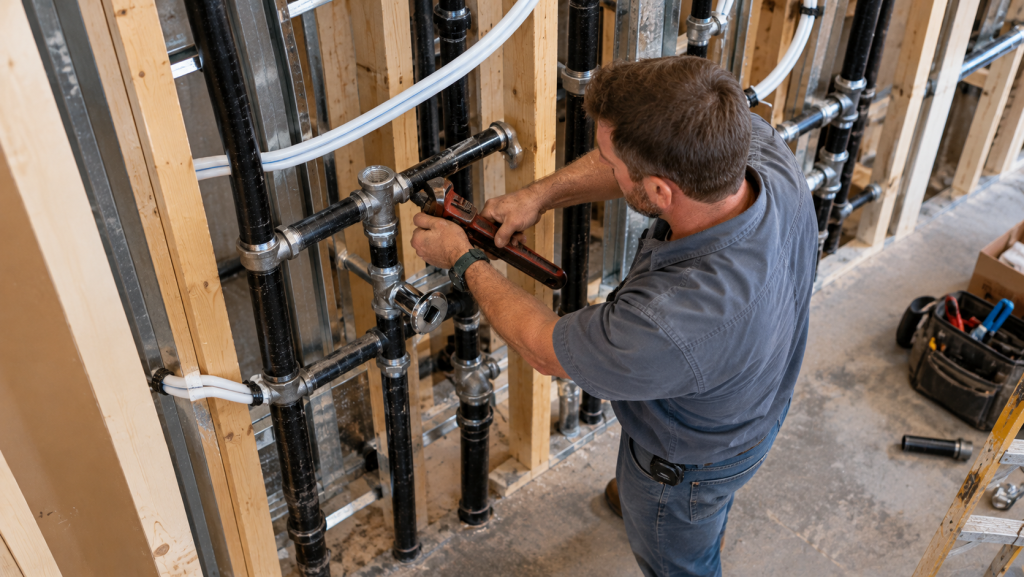
Plumbing touches the slab, the walls, and the ceiling. It also ties into pipes the landlord owns. So it affects more trades than almost any other scope.
When coordination fails, problems show up fast. Drains clash with ducts. Walls close before inspections. Fixtures arrive after the tile is set. Each mistake means rework, delays, and frustration. On the other hand, strong coordination lets every trade work faster and cleaner.
Bring the Commercial Tenant Improvement Plumber in Early
The best time to involve a commercial tenant improvement plumber is before the drawings are final. During preconstruction, the plumber can:
- Verify the sewer stub location and depth
- Check the size of the existing water service
- Run a camera through old drain lines
- Suggest layouts that cut trenching
- Flag special systems and long-lead items
- Give budget pricing for different options
This early input often saves more than it costs. For example, moving a restroom ten feet closer to the sewer can cut days of slab work.
Clear Scope Boundaries
Scope gaps cause many disputes. So define every interface in writing. Common gray areas include:
- Who saw-cuts and patches the slab
- Who provides gas piping to equipment
- Who installs owner-furnished fixtures
- Who handles firestopping at pipe penetrations
- Who connects condensate drains from HVAC units
- Who wires sensor faucets and water heaters
A simple scope matrix attached to the subcontract prevents finger-pointing later. Our Division 22 plumbing page explains how we define these boundaries.
How a Commercial Tenant Improvement Plumber Builds the Schedule
The plumber’s work appears at several points in a TI schedule. Typically, the sequence looks like this:
- Underground rough-in after demolition
- Underground inspection and concrete patch
- In-wall rough-in after framing
- Top-out inspection before drywall
- Water heater and equipment connections
- Fixture setting after finishes
- Final inspection and closeout
Each step depends on the one before. So the GC and plumber should agree on durations, inspection lead times, and handoffs. A shared look-ahead schedule, updated weekly, keeps everyone aligned.
Weekly Coordination Meetings
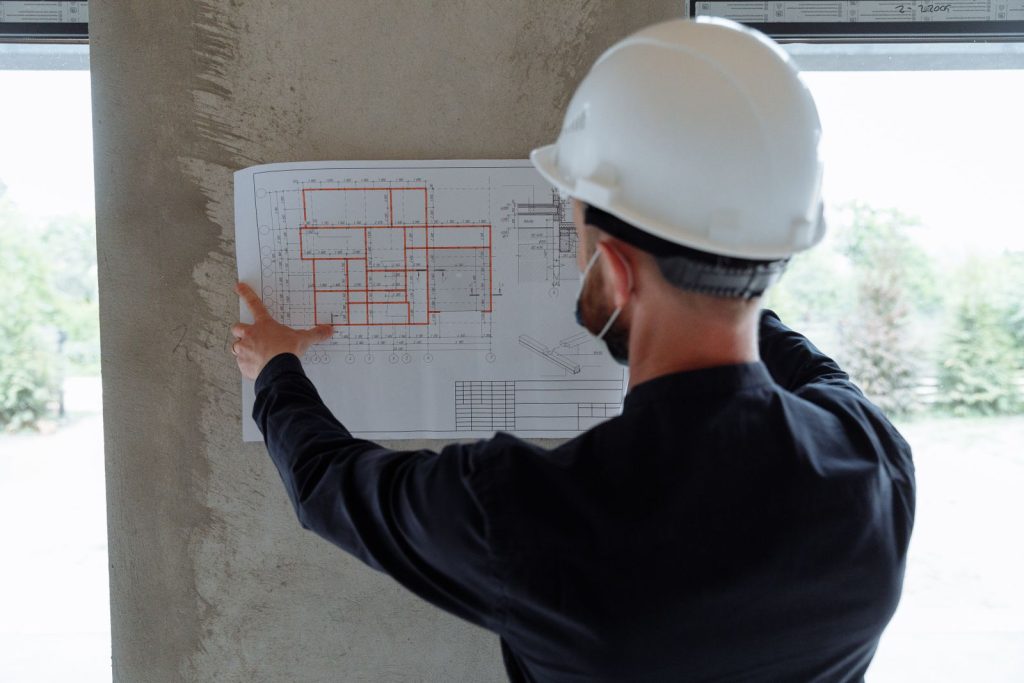
Weekly meetings are the heart of trade coordination. In these meetings, the commercial tenant improvement plumber reviews progress, upcoming areas, and open questions with the GC and other foremen.
Useful topics include:
- Areas ready for plumbing next week
- Inspection dates and results
- Ceiling and wall clashes with other trades
- Fixture and equipment delivery dates
- Open RFIs and changes
- Safety concerns
Keep the meetings short and focused. Then send a written summary so nothing gets lost.
Managing Ceiling and Wall Space
In most suites, ceilings are crowded. Ducts, sprinkler pipes, lights, cable trays, and plumbing all compete for the same few feet. Gravity drains have the least flexibility, because they need a steady slope.
Therefore, plumbing drains should get first priority in tight ceilings. Then ducts and other systems route around them. Some GCs use simple overlay drawings or 3D models to find clashes before installation. Either way, resolving conflicts on paper beats tearing out pipe in the field.
Inspections as Schedule Milestones
Inspections drive the schedule. A failed plumbing inspection can stop drywall, concrete, or ceiling work. So the plumber should test their own work before calling the inspector.
The GC can help by confirming access and clearing the area. In addition, the GC should know inspection lead times in their city and plan accordingly. Some cities book inspections days in advance.
How a Commercial Tenant Improvement Plumber Handles Changes
Of course, changes happen on every job. A tenant moves a sink, adds a coffee bar, or upgrades fixtures. Each change can affect pipe routes, sizing, and schedule.
To manage changes well, the plumber should price them quickly and explain the impact on time. Meanwhile, the GC should get owner approval in writing before work proceeds. Clear records protect everyone when the final bill arrives.
Working in Occupied Buildings
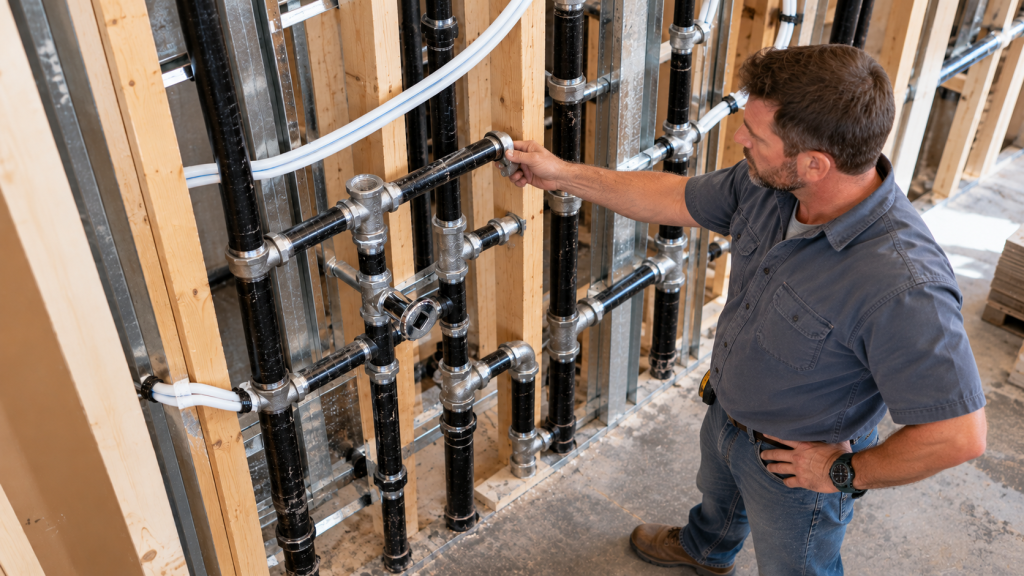
Many tenant improvements happen while neighbors stay open. That means water shutdowns, noisy work, and shared spaces need careful planning. The plumber and GC should coordinate with the landlord on:
- Shutdown dates and notices
- After-hours work for saw-cutting
- Protection for lobbies and elevators
- Access to shared mechanical rooms
Quality Control and Closeout
For the plumber, quality control starts early. Good plumbers photograph pipe before walls close. They label valves and cleanouts. They test fixtures before the punch walk.
At closeout, the plumber should hand over as-built drawings, warranties, manuals, and backflow test reports. The GC then includes these in the owner’s closeout package.
A Week With a Commercial Tenant Improvement Plumber
What does good coordination look like day to day? Here is a simple example. On Monday, the plumber walks the site with the GC. They check which walls are framed and which areas are ready. Then they confirm the plan for the week.
On Tuesday and Wednesday, the crew runs pipe in the ready walls. They take photos as they go. On Thursday, they test the work and fix any small leaks. Then, on Friday, the inspector comes. Once the inspection passes, the GC tells the drywall crew they can start on Monday.
Nothing fancy happens here. Yet this simple rhythm keeps the job moving. Each trade knows when it can start. In short, a good commercial tenant improvement plumber makes the next trade’s job easier.
Common Coordination Mistakes
- Closing walls before the plumbing inspection
- Setting tile before floor drains are at the right height
- Running ducts where drains need to slope
- Ordering fixtures too late
- Skipping the weekly meeting when the job gets busy
Each of these mistakes costs time. Fortunately, each one is easy to avoid with a little planning and steady talk between the GC and the plumber.
Tools That Help
Simple tools make a big difference. A shared online schedule lets every trade see the plan. A group text keeps quick questions moving. Meanwhile, a photo log of in-wall pipe helps settle questions later. Many GCs also use a short daily report from each trade. None of these tools cost much, yet they save hours every week.
What GCs Should Look For in a Plumber
Choose a commercial tenant improvement plumber who answers calls, shows up on time, and flags problems early. Ask for references from other GCs. Also, check licensing and insurance. Most states list licensed contractors on a public board website.
FAQ on Working With a Commercial Tenant Improvement Plumber
When should the GC bring in a commercial tenant improvement plumber?
Ideally during design, so the plumber can verify site conditions and help shape the layout.
How often should the GC and plumber meet?
At least weekly during active work, with quick check-ins as needed.
Partner With a Plumbing Team That Coordinates
Strong coordination turns plumbing from a risk into a strength. Learn more about our work as a plumbing subcontractor, or contact our team to discuss your next project. The Associated General Contractors of America also offers useful resources on trade coordination.